Preston Peterson on Picking the Right Private Equity Partner

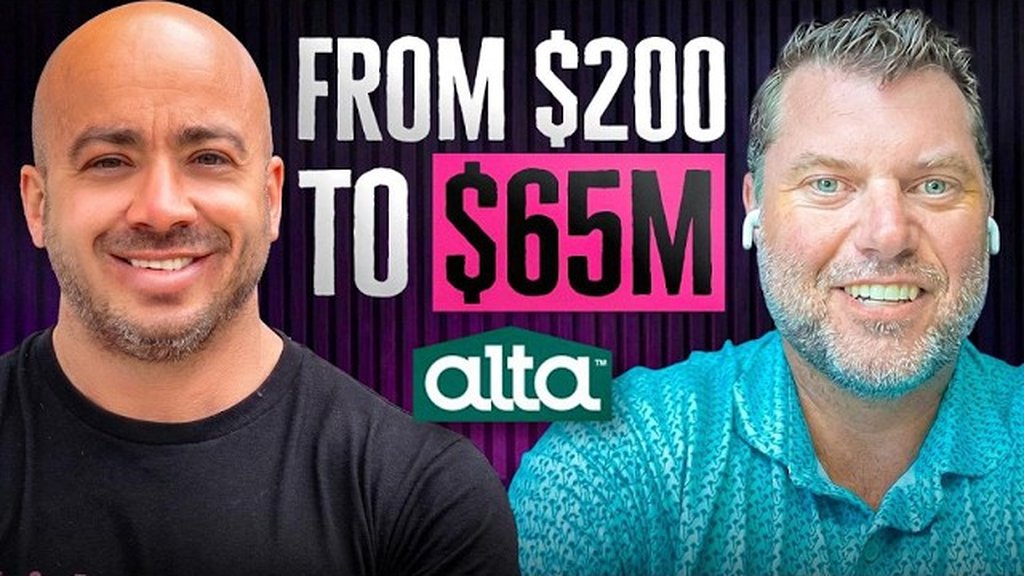
Table of Contents
- He started with $200 and a borrowed minivan
- Your first exit takes away the fear
- The deal that died three days before closing
- One plus one can equal three
- Pick the partner, not the multiple
- What private equity brought besides money
- Private equity buys cash flow, not revenue
- Decide what you’re building, or the business will
- Frequently Asked Questions
Preston Peterson is a co-owner of Alta Pest Control. He’s been in pest control 22 years and has had six or seven exits, and when we recorded this, Alta was doing about $65 million a year after a merger and a private equity deal. He started with $200 to his name.
I’ve always been pretty closed off to private equity. You hear a lot of bad stories, and I have friends who went through it and don’t work for their companies anymore. Then you hear people like Preston say PE has been awesome. So I asked him the questions I need answered for myself. Here is what stuck with me.
This episode is part of the PCM Podcast. For the other side of the table, read what Paul Giannamore taught me about selling your company.
He started with $200 and a borrowed minivan
Preston grew up mostly in San Antonio. After a two-year church mission in Brazil, he went to BYU-Idaho and met his wife on the first day of school. When they got engaged, he had $200 to his name and she had a $3,000 student loan at 20% interest. Neither of them had a car or a cell phone.
Some buddies told him he could make good money selling door-to-door. He borrowed his mom’s minivan for the first month, and his bonus as one of the top first-year recruiters paid for about half of his wife’s wedding ring. He sold about 240 accounts that first summer, then managed for two years.
In 2007, during the recession, he started Peterson Pest Control in San Antonio on credit cards. His wife was pregnant and on bed rest for 10 weeks, answering the phones on a cell phone and running the whole company off a laptop. Preston knocked doors at night, serviced the contracts the next day, changed into shorts at a gas station and went back to knocking. He did 400 or 500 accounts that first year. “You learn and adapt,” he said. In the moment, you don’t have a choice. One of the most important skills you can develop is the ability to figure it out.
Your first exit takes away the fear
Preston partnered with a buddy and opened in Houston. It didn’t go the way they wanted, so after about a year they sold it, and the buyer offered a better multiple if they threw in San Antonio. Each was doing around a million dollars. “It kind of took away the fear of, okay, at least we’re building an asset that somebody will eventually want to buy,” he said.
Next came a company in Dallas, home security companies on the side and an office in Oklahoma. Security didn’t work as well, so they doubled down on pest, sold Oklahoma and Dallas to raise cash, to Terminix if he remembers right, and started over. I see owners chase new things all the time. They get to about a million dollars, take their foot off the gas and start something else. Stay focused and get really good at the one thing.
The deal that died three days before closing
The hardest moment came at Ardent. Preston had brought his brother into the business, and his partner Aaron was one of his best friends from college. They built two big sales teams in San Antonio and Dallas, planning to sell a branch to pay the reps’ back ends. In November they had a letter of intent with one of the largest pest control companies, about 30% more than any of their past exits. Three days before the check, the buyer backed out. It still wanted the deal, just in six to eight months. The back ends, probably about half a million dollars, were due January 10.
Preston and his brother knelt in Aaron’s guest room and prayed. Then his brother went back to coaching football, and Aaron needed to move home to Idaho to be with his family. Aaron’s idea saved them. Get rid of all the brick and mortar, run operations remotely and build the office in Rexburg, Idaho, where staff cost less. They doubled down on collections, Preston’s dad offered his $40,000 line of credit, and they made the back ends by about $10,000.
Dropping the buildings saved $60,000, maybe $150,000 a year. Then they gave their sales guys equity in branches. “You bring the sales, we’ll run ops,” they told them. A million-dollar branch normally costs $200,000 to $300,000 to start, and they did it for a fraction of that, with some branches profitable and paying dividends within 12 months. Ardent made the Inc. 5000 list of fastest-growing companies about seven years in a row, and when COVID sent everyone home, they’d been remote for five years.
“Your trials don’t have to make you or break you,” Preston said. Sometimes your biggest blessings are sitting right in front of you. I say this all the time. You don’t need a building. You could run 70 trucks without one, with trucks at the techs’ houses or two to a $100 storage unit. We run a $2 million branch out of a storage unit.
One plus one can equal three
As Ardent grew, private equity started calling. Preston’s friends in the space told him a bigger company would probably get a better multiple. Ardent bought out franchise partners who wanted to go their own way, and because its door-to-door side wasn’t huge, it got good at technician sales, inspector sales and inside sales. In its final year, door-to-door brought in about half the accounts and the other channels the rest.
Friends with companies their size didn’t want to merge. “Dude, 1 + 1 can equal three in this situation,” Preston thought. At the PCT Top 100 awards banquet he met Chris Langlois and his brothers, the Alta guys, in their first year on the list. Their markets fit, from Ardent’s San Antonio and Dallas to Alta’s Austin, and Alta’s strong door-to-door program matched Ardent’s technician sales.
Merging means short-term friction. “The long-term vision outweighed the short-term issues,” he said. Alta’s side worried that changing the name to Ardent might scare its reps, so they kept Alta. “Our culture we built isn’t around a name,” he said. Preston and Chris were co-CEOs for about nine months and never fought, just had frank conversations. “If you go into it with an ego, you’re going to have a hard time,” he said. Before the private equity deal, they agreed the company needed one CEO, and Preston stepped back to be an active board member and advisor.
Pick the partner, not the multiple
Preston vetted four or five private equity firms with help from friends in the space, without running a big process. One firm they were excited about sent an offer with management fees so high it was dead on arrival. They found out later it had forgotten to change the fees from a previous deal. By then they had moved on.
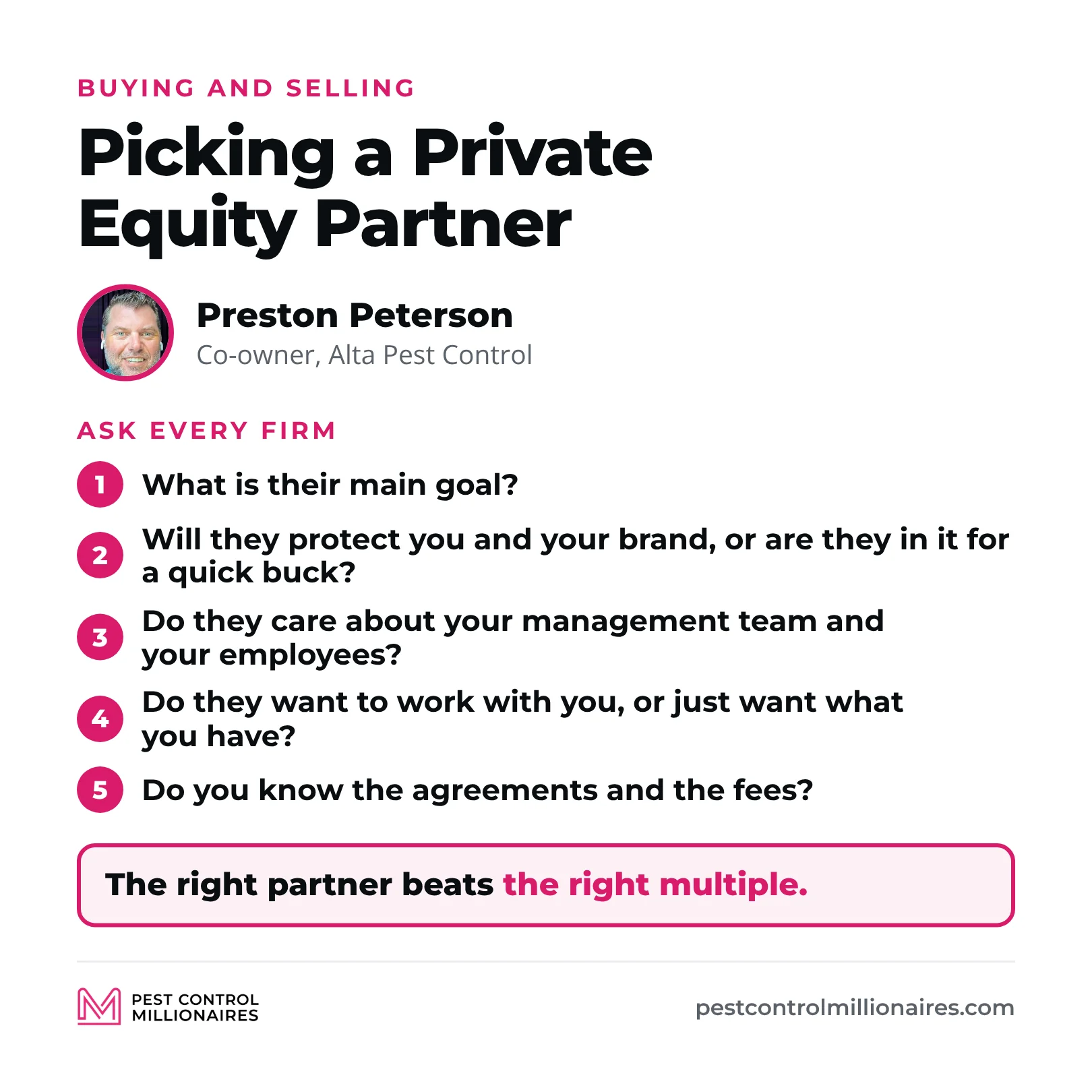
These were his questions. What is their main goal? Are they going to protect you and your brand, or are they in it for a quick buck? Do they care about your management team and your employees? Nobody at Alta wanted to step away. They wanted help growing the company, and they wanted to keep running it.
The firm they picked had been their number two, a minority stake fund that only invests in founder-led companies. It kept showing up, and it was willing to give on things they wanted, while other firms wanted to work with them on their own demands. “You’ve got to make sure when you’re getting that partner that they want to work with you and it’s not just they want what you have,” he said.
Would he take a lower valuation to get the right partner? “The answer is yes, you should,” he said. Unless you’re getting completely out of the business, the valuation doesn’t matter much without the right partner. They sold a minority stake, though they’d have been fine either way. “The right partner’s more important than the right multiple. Like, I can’t stress that enough,” he said. And know the agreements. That lines up with Paul Giannamore’s warnings about the fine print.
What private equity brought besides money
Multiples can be better with private equity, but every time Preston sold before, he had to start over. “This is a way that you have a chance to take some chips off the table, get some cash out, but not start from scratch all over again,” he said.
The firm looks at how to grow a business three to five times in four to five years, and that pushed Alta to spend where an owner might not. They used a third-party recruiter to hire a CFO, which Preston doesn’t think he or Chris would have paid for on their own. They brought in consultants on retention, because stopping churn, for customers and employees, is the biggest thing every company in this industry has to get better at. And they spent a bunch on software so they could see their KPIs. I hired a CFO about three years before we recorded this, and I probably couldn’t afford him at the time either. It was a massive win.
When we recorded this, Alta had grown about 3x since the deal without doing a lot of acquisitions, and the firm mostly shows up for board meetings. “We trust you guys,” they told Alta. Your people are “your best asset,” Preston said, so don’t partner with anyone who would shortchange them.
If you run door-to-door, expect to explain it. Private equity and big strategic buyers often don’t get how it fits, with commissions and churn rates that look ridiculous on paper. Preston had friends who do business transactions help explain why the model is sustainable. Door-to-door is our most expensive channel per customer and still builds new markets fastest, as I break down in what we pay for a new customer.
Private equity buys cash flow, not revenue
So how big do you need to be? Preston thinks it’s a sliding scale. Too small doesn’t make sense, and too big shrinks the pool of buyers. “I think most PEs like to see 5 million in EBITDA,” he said. At $10 million or more in EBITDA, you’re doing really well.
Most pest control owners think in revenue, not EBITDA, and that’s why door-to-door multiples are all over the place. You can be a huge company with almost no EBITDA and churn through the roof. “They’re buying cash flow. It’s all they’re buying,” he said. If you’re heading that way, hire someone who knows the game to make the business look as good as it can, which is how you should be running it anyway.
I see it all the time. Owners doing $1 million to $3 million think they’ll get three times revenue, and owners doing $250,000 or $500,000 think they’ll get a million bucks. Nick Bartolo walked through what your business is really worth, and the multiples by EBITDA are in my guide to selling a pest control company.
What changed most on the way to $65 million? For Preston it came down to one word. Visibility. Everyone has to know the real numbers and see everything, in real time, so there’s transparency and accountability. Their CRM didn’t give them the full story, so they added software and data people.
Decide what you’re building, or the business will
The nutrition supplement company Preston started with his wife grew 400% to 500%, then another 500%, then 380%. He likes that a product business makes money right away instead of buying a contract that pays off 18 months down the road. But if he started over, he’d still pick a service business, and he doesn’t see robots doing our jobs anytime soon.
He has three tests for any business. Can it get to at least $50 million? Can he get an exit? And can it change people’s lives? At Ardent, three technicians had the company tattooed on their bodies, and none of them were owners.
What would he do differently? “I could have saved 10 years on my journey had I had a mentor or great partners,” he said. Don’t be afraid to partner with the right people, as long as your visions match. And know what you’re trying to accomplish, or you’ll let the business dictate what happens.
Frequently Asked Questions
Who is Preston Peterson?
Preston Peterson is a co-owner of Alta Pest Control. He has been in pest control for 22 years and has had six or seven exits. He started selling door-to-door with $200 to his name, built Ardent, merged it with Alta and sold a minority stake to private equity, and Alta was doing about $65 million when we recorded his episode.
How do you choose a private equity partner for a pest control company?
Preston asked what each firm’s main goal was, whether it would protect the company and the brand or was in it for a quick buck, and whether it cared about the management team and the employees. Make sure they want to work with you, not just what you have, and know the agreements. He’d take a lower valuation for the right partner unless he were getting completely out of the business.
How big does a pest control company need to be for private equity?
Preston thinks most private equity firms like to see about $5 million in EBITDA, and $10 million or more means you’re doing really well. Think in EBITDA, not revenue, because they’re buying cash flow.
What did private equity bring Alta besides money?
A long-term view on growing the business three to five times in four to five years, a CFO hired through a third-party recruiter, consultants on retention and software for better visibility. When we recorded the episode, Alta had grown about 3x since the deal.
Full transcript
Every word of the episode, from the video captions
Building the business turns you into a different kind of human being. Realize that failure is a part of the journey. I think there's hope out there for all of us. They say procrastination be the assassination of destinations. That's why we out here grinding with no association. We'll hate us then them other crabs trying to put us down. Pest Badger's in the house, boy, don't clown. Welcome back to another episode of Pest Control Millionaire. I don't think this guy needs much of an introduction in our industry, but I'm going to introduce him He's a owner, president, do you say? Founder? What do you call yourself? Yeah, coming co-owner. Cool. You know. So, co-owner of Alta. We got Preston Peterson, co-owner of He's been in the industry for 20-plus years, 22 years. He's had six or seven exits. He runs Alta now. They're currently doing about 65 million.
Went through PE. Went through some mergers. Lots to learn in this one. I've been excited about this one for a long time. Then all of a sudden he reached out to me yesterday and like, holy crap, this just happened. Super cool. Preston, thanks for being on this today. I appreciate it. Yeah, no, definitely. It's been a It's been a fun ride. It's been a really good ride. Yeah, and I think like we were talking for like 10 minutes before the podcast and like we just have to hit record. These are the questions that I have to ask myself that I need to learn going through PE. You know, I've always been like I told you Mike, my just really closed off PE. You hear a lot of a lot of the bad stuff, right? I've had some friends recently went through PE. They're currently don't work for with the company anymore. And then you hear people like yourself that go, "PE's been awesome." So, talk about But anyway, then he went and started a nutrition supplement store. He said that he's done in 4 years what it took him 20 years to do in pest control. So, we're going to talk about that.
It's going to be a lot to unpack here. But first question I always ask first, Preston, if you and I were junior, senior in high school, who is Preston Peterson in high school? You know, it's fine to kind of funny cuz I always wanted to be a stock broker. And I literally was trading stocks since I was like 12. And never really had a didn't know about pest control, didn't know about any of this kind of stuff. It was more of like I just love stocks. So, I just you know, trade the market. It's one of those things where it's like everyone has good deals and bad deals, but they always talk about the good ones. So, it's like no matter what, nobody knows the perfect answer. So, you can kind of fit in right away just by, you know, knowing some basic information, you know?
But that that's what I wanted to do. And then I found out there was a lot of hard work and you had to get go to school for a long time and really understand finance and all this deep deep schooling stuff. I was like, "Yeah, that's not for me." So. Were you Were you a math guy in high Do you like numbers?
Not really. I mean, I liked numbers well enough to get to know them, like well enough to understand like business and that kind of stuff. I loved business. I loved the idea of business. I loved the idea of creating And so, like I'd have some small like I remember like sixth grade I was selling candy on the school bus. You know, like stuff like that where it's just like, "Hey, what's some opportunity You know, when Beanie Babies were big, I used to buy them and sell Beanie Babies. You know, like when I was like 10 or 11. Like just, you know, you look for opportunities and you're like, "Wait, I can I can do this. I don't need to wait till I'm older to start a business or make some money on the side and stuff like that." So, I just love the idea of business and entrepreneurship and being around, you know, people like that. So. Cool. Were you in sports? Do you do anything like that? Yeah, so it was actually kind of funny. So, I played football, high school football.
Wasn't that great. My dad actually was in the NFL as a scout for like 20 22 years. So, not a business guy at all, like didn't have a business background, didn't have like a business family kind of thing, but he was just super supportive, you know, and so but it was kind of off my brother when he got all this all the talent, he went and played Division 1 football and was a coach and all that stuff, where I just got the business background. So. I'd say you're doing all right. Yeah. So, it's been good. So.
So then, where do you go after high school? What happens then? So, I go on a mission for our church for 2 years. So, I went to Brazil for 2 years, and then I came back and I went to school at Came back in August, met my wife the very first day of school, and, you know, we start dating, you know, 4 months, 5 months in, it's like, "Okay, this is maybe get serious." We I get engaged in March. I get engaged, I have $200 to my name. And she has a $3,000 student loan at 20% And I neither of us have a car, neither of us have cell phones, you know, we have nothing. And so, I was had some buddies that had done door-to-door sales, and they're like, "Dude, you know, you should do this. You can make good money." And I'm like, "I'm about to get married, and we have 200 bucks." Like, I had to borrow my mom's minivan for the first month, so I could go and like do sales.
And I remember the company I signed they gave me like a I was one of the top first-year recruiter, you know, I think I recruited like 10 or 15 guys. So, they made like an incentive, so I could get like a little in bonus just to be able to pay for like half of my wife's wedding ring. Cuz we had literally no money. And we go and, you know, I sold door-to-door that first summer, and I think we made She worked in the office. I think I sold like 240 accounts my first summer. Yeah, I think I was there for like 2 and 1/2 months or 3 months or something like that. So But yeah, and then it kind of next year I managed and then, you know, managed one more year and I was like, okay, I think I kind of might be decent at this. And so we went we started our own company.
And I remember it was one of those moments where my wife was pregnant and on bed rest and she was literally answering the phones on a cell phone and running off a laptop the whole company when she was on bed rest for 10 weeks. And I would go and knock doors at night, the next day service the contracts, change, you know, into some shorts at a gas station, go knock doors the rest of the night. You know, I think I did four or 500 accounts the first year. And that was it. Like that was how we got started. And that was, you know, it was It was a fun journey. For sure. When you were knocking doors for the other company, what was the commission rate then? I think I think it was like the overriding manage manager like override, I think, for recruiting and managing was like 2 3%.
And I think we capped out at 28%. And that was like for 400 500 accounts. The good old days. Oh, yeah. Like it was I look at it now and I'm like, God. Man. Oh, I wish I could pay fraction of that.
So what made So what made you go out on your own? I mean, sounds like you just kind of you always had that entrepreneur itch somewhere. And then you after your third year, you just kind of like, "Hey, I'm pretty good at this. I can manage a team. I can run a team. I can sell accounts. Why am I doing it for someone else?" Is that kind of what your thought process was? Or did you just walk into that? Yeah, so the company I was working for started to do like franchise kind of I really wanted to go back to Texas. I was from Texas. They had non-competes in Texas, so they're like, "Hey, we can't do anything there, but you know, if you kind of help us open this office for us, we'll show you what to do, but we can't be there." So that was kind of the reasoning behind it that I was like, "Okay, well, I want to be close to home and you know, I know that market."
But yeah, that that was the main reason why. So you went to BYU, but then you sold in Texas your first year? When I when I started, yeah, I sold in Dallas my first year. And then Dallas 2 years, then I went to Atlanta, and then we opened up in San Antonio for my own company. Did you live in San Antonio San Antonio then? Yeah, yeah, that's where I grew up most of my life was in San Antonio.
So that's what I had to know. That's pretty cool. Yes, so I went to BYU-Idaho for like 2 years, then I dropped out and both Both my parents have their masters. My dad has his PhD, so I was kind of like the black sheep. So, we went back after like 7 years of owning a couple companies and selling them to get the piece of paper and to help recruit. So, I went back for a couple years to get that get that done so I can at least say I'm a college grad, you know. That's cool. Hold up. Quick pause. If you're on any pest control company or fertilization weed control company and you're not in our Facebook group, you're choosing the harder path. Every operator that's in there is skipping years of mistakes cuz people are actually sharing what's working right now. So, stop trying to brute force your way through growth alone. Search Pest Control Millionaires on Facebook or click the link below. And now, let's get back to it. So, yeah, walk us through your first company. So, you go your first summer, you sold 400 accounts. And then, how long do you do that for?
So, we had our first summer, it was called Peterson Pest Control. And I think we had it for 2 and 1/2 3 years. We had a buddy of mine that we partnered with I think after my second year and we opened up in Houston. So we opened up another company in Houston. We had that for like 12 months, 9 months and it was just kind of like yeah, you know, maybe this isn't what we want to do with the partnership and everything and so we end up selling that that office in Houston after like a year they were kind of like hey, if you throw in the San Antonio one, we'll give you a little bit better multiple and all of it. So we're like okay, cool. So we do that. We sold San Antonio, we sold Houston and we started a new company up in Dallas and so we started up in and we have that one for like two and a half three years. We also had partnered with a buddy of mine and then we started home security companies as well. So we kind of did both of those after you know for just a couple years and then realized you know what we're really a lot better at pest.
Let's just stay more with the pest and so kind of double down on that and had that So we opened up in Oklahoma. I think we had Oklahoma and Dallas. We sold those because we're like you know, we want to get back to San Antonio markets, you know, raising cash. Sold those to a you know, I think it was Terminix. We sold those ones too. And then we restarted in San Antonio, Dallas and kind of go from there and that was you know, where we were at. So...
Questions already. So when you started the security and pest control, super common. Like people just I think it's just entrepreneur itch too. Like kind of like the shiny engine side like the shiny object syndrome. Like we just like we like to make money like to chase many new People just selling door to door. It's really cool. It's an add-on service. That sounds really But if you just stay focused, which you guys obviously end up doing. Cuz I just see this all the time. People get to like around the million dollar mark and they like got a couple technicians. They get you know kind of like they put off the gas a little bit and they go on and go start something else all the time. I'm like just stay focused. Just keep doing the one thing really be really good at it. And it sounds like you kind of went through that phase of your life, too. You started with security system. You're like, "Oh, we're not as good at that. Let's focus back on just the one thing, pest control." And you sold that. So then you're like two acquisitions in at this point. What did you learn in the first two So the first one it was good because it was like it taught honestly got rid of the fear.
Right? When we had the Houston branch and it didn't go as well as we wanted. But we were still able to get a deal to be to be sold. It kind of took away the fear of Okay, at least we're building an asset that that somebody will eventually want to buy. And at that point, how big was when you sold that? I think we were like a million dollars. I think we did that...
So you're like five like 600,000, 400,000 in one or how did that work? Do you remember?
No, oh sorry. Yeah, and I think our Houston branch, I think that summer we did probably about just around a million. And I think the other one was probably like 900 or a million dollars, something like that. But it was like so it kind of helped remove the fear aspect of it of like, "Okay, we can at least do this." You know, but we didn't have we didn't have a lot of cash, either. So like nowadays, a lot of these guys you know, they're able to get ways to get lines of credit or loans or whatever. I mean, we were I opened my first company during the recession in 20 20 2007, right? So it's like we go through this huge recession and we're having no cash. I mean, I'm building this business on credit cards. And you know basically praying that you know, we can get through this thing. And, but you learn, you know, you learn and adapt. And I think that's the biggest thing, right? It's just like I look back at some of the things that we went through. I'm like, "How did we ever do it?"
I don't know if I would have done it now, looking back, but it's like when you're in the moment, you're like, "We don't have a choice. We just did it." You know? And so And but that's what makes you become the person you need to become. And to be able to handle the success down the on the down the road. Yeah, I posted this yesterday. So, one of the most important skills you can develop in life is the ability to figure it out. Cuz that's just what we do as entrepreneurs. Like we get thrown at us every single day. We just got to figure out how to deal with it. And you learn every single day. And I feel like the bigger you get, the more you learn constantly. Cuz like feel like a lot of the smaller problems, like the lower level management can handle, but all the big problems come like slap you in the face every single day, you know?
And I'll say this, like you know, there's always there's about three or four key moments that I can look back on on this business and other businesses that I've done. And a lot of it is just trusting in God. You know, and there's been key moments where I'm like, you know, I had no clue what the answer was. And going through the trials, the biggest trials we went through, leaning on God turned out to be the biggest blessings in the long run for us. You know, there's probably three three or four moments that we thought, you know, this is it, we're done. Like I don't know how we're going to make it through this. Can you talk us through those three? Yeah. I'll talk you through the biggest one. And, you know, so we start we start Ardent, right?
So we did security. We had Ardent for a couple years, maybe. We were in San Antonio, we were in And we were like, hey, let's do security cuz it's a little more cash up front. You can make some quick money. It's a lot harder industry, you know, we recruited I brought my brother into the business. My other partner at that time was one of my good best friends from college. He had been with me in other ventures that I had done. And so we go down and the security wasn't really working that great. So we're like, let's go double down on pest control. And so the idea was we were going to have two big teams in San Antonio and Dallas. And we were like, we're going to need to sell one of our branches to be able to pay our back So but we're like, hey, we're going to make a bunch of money as we do it. And so we're like, great. That sounds awesome. Let's double down. Let's grow this thing.
So we go have two good year and good We're in probably November. We get a deal structured with one of the largest pest control companies. It's like 30% more than we received on our past exits. Really good terms. We're all excited. We're like, dude, this is going to be amazing. We're going to make a bunch of money. You know, we go through due diligence with them. We had a line a letter of intent, all that stuff. Three days before we're supposed to receive the check, they back out of the deal. And we're sitting there like, we have back end checks coming January 10th. I can't remember how much we owed on back ends. It was probably half a million bucks or so. I remember when we went and where we went to we were staying at my partner Aaron's house and my brother was down cuz you know, when you're getting ready to sell you're like, hey, we got to get as many customer service, you know, all this kind of stuff. So, we're all running a bunch of routes and stuff like that and they this company flies out and meet with them and they're like, yeah guys, we want to do the deal. We just can't do it for like 6 months to 8 months. They had done some other acquisitions, I guess at the time.
And I'm like, we don't have 6 months. I've got 3 months. I don't know if I should even say that to them. But, I remember when we sat there we came back to my to Aaron's house and we went to his guest room and my brother and I we just we just literally knelt on our knees and we just prayed and we were like, we do not know what we're going to do. We just trust in you God that it'll work out for if we're supposed to do continue in this industry, then we trust it'll work out. If we're not, then help us understand where we need to go. And because the thing is right, if you don't pay your back end it's good luck trying to keep your reps, right? And I get it, right? No no one's trusting if you can't pay your back ends. And so, we were we were freaking out. I didn't have a lot of good contacts for finances at that moment and you know, so for we got like 2 months to try to get regroup you know, regroup and collect as much money as possible to try to get these back ends paid.
My brother's kind of like, hey, you know, I think if we're not really going to do this much maybe I want to go Here's coaching football at the time. So, he's going to say, hey, maybe I want to go coaching or not, go back into coaching. I was like, I understand. My other business partner his dad had gone through some medical issues and he was like, yeah, I need to go back to Idaho to be with my family. And so, I'm like, I get it. So here we are thinking how do we one get the money to be able to pay these back ends that are due in 2 We've got hundreds of thousands of dollars that we're short. And it was my Aaron, my business partner, he comes to me and says, "You know what? Like I'm moving to Idaho.
And I think there's a way for us to continue to run this business, but I can't stay in Texas anymore. If I can't be remote, then I'm going to have to leave, you know, to go be with his And so he was the one that comes to me and says, "I think we should get rid of all of our brick and mortar. And I think I can run the operation then I think we can maybe build our office up in Idaho, where, you know, it's Rexburg, Idaho, a small town, a little bit cheaper, you know, office staff, and that kind of stuff." So we do that, and we just double down in our collection efforts. And I think my dad went to me and he's like, "Yeah, I got a 40,000 or line of credit, you know, son, if you need to use it, you can."
We ended up making our back ends by about $10,000. And what we did is we got So we got rid of all of our brick and mortar at that And so that saved us 60,000, you know, maybe 150,000 a year just from all the things that come with And being able to get a lot more Well, what we don't know, right, is that So we start building these like franchise models with our sales guys and saying, "Hey, you know, you can have equity in some of our branches, and you bring the sales, we'll run ops, and all that kind of But we were able to get these things way more profitable with way less money. I mean, normally if you're like a million-dollar branch, you cost like two $300,000 just in startup costs to get your sales team and all that. We're able to do it for a fraction of the cost and we got some of them profitable within 12 months. And paying dividends out in 12 months. And so, we then go on to be, you know, Inc. 5000 fastest-growing companies for like 7 years in a row. And it changed the whole structure.
So, it's kind of funny because when COVID hit and everyone's sitting there saying, "We've got to be remote. How do we do this?" We're like, "Dude, we've been doing this for 5 years. Like, this is nothing, you know?" So, you know, something that we thought was the end of the world, we're like, "Dude, we would have never pivoted had we not had to go through that trial to force us to pivot." And our made our profit margins way higher and allowed us to be way more successful with way less resources. And otherwise, we'd have just kept doing what the industry does, right? It's just like, "Oh, you go get a building and, you know, have all these techs and they come in and you know, all this kind of stuff." And so, it's just a lot more risk, right? And so, now It's so funny that you mentioned this cuz on my YouTube channel and my podcast, I state this over and over and over again. You do not need a building. You could run 70 trucks and not have a Like, pest control's a little bit different. You can take You can take your trucks home.
You can rent a You can rent a rental storage unit for 100 bucks, fit two trucks in there, you can keep some product there and you know, depending on which state you're in. But, what did you guys You guys pivoted to just keeping trucks at all your techs' ho- houses? Getting a storage unit? What did you guys do? Yeah, so I mean, we would do that eventually. So, we'd get like storage units where we could and they'd just kind of meet for their meetings there and they'd take their trucks home and they'd just pull out whatever they needed for chemicals for the next week.
Yeah. You know? And you know, now I think we've got offices and stuff like that. We're a lot bigger company and...
You have more cash, right?
Marketing. Yeah, oh yeah, now it's Now you have Now you need to play some cash so if you go to play some cash now you're playing like the mortgage game okay we can go buy an office here on this office in this location now you're buying property kind of like McDonald's did you know. Yeah, yeah. Yep, so but yeah but I'll tell you that was the recurring theme is your trials don't have to make you or break you but trusting in God through those moments is what will make you a better in the long run. And sometimes your biggest blessings are sitting right in front of you and you don't realize it. Yeah, and like I before we talked about this I told you what happened to me in COVID again and I pivoted and I was like huh this is off this industry is amazing.
And then when I got it when I got in like the only reason I even started the podcast is cuz I was in this networking group through my mentor and he sold his company and so that kind of went away but we all want to stay together like hey we should start a podcast so no one started a podcast to stay together so I started a podcast and then turned into this and I'd never expected that so it's just pretty cool and now I get to meet people like you every single day it's super awesome. So then so that you would did that for like the next four or five years and then what happens with Ardent? So we brought in these like kind of a franchise thing where like our sales guys can have some equity in you know we kind of you know we started getting bigger and bigger and so private equity starts to you know reach out to us a lot. So we're getting a bunch of interest from private equity.
I've got some good good buddies that are in the you know private equity space or do transactions and so they're kind of mentoring me on stuff and kind of help me understand like where do we need to be and stuff like that and so we're you know we go in and to some people about the space and like is this something we should do or not? And they're like, "Yeah, you know, it could be a huge benefit." we were probably a little bit smaller than we needed to be. And so they come to us and they say, "Hey, if you can get a little bit bigger, you'll probably get a better multiple." And we had some of our franchise guys wanting to kind of get out and do their own thing and, you know, explore their own options, which was great. And so we're buying them out.
And I'm like, you know, our door-to-door side's not huge, but it forced us to you know, deep dive into technician sales, inspector sales, and our inside sales. So I think our last year, I think we were almost at parity of 50/50 split, right? Where I think it was door-to-door put on about half of our accounts. And then we had inspector technician sales and in inside sales, which were probably about the other half. It was good because it kind of focused these other avenues that we had not really paid much attention to. But for profitability wise, we're a little bit better and stronger, not as much reoccurring, but a lot of more up front and those kind of things. So then we're kind of looking around and I have some buddies in the industry that were same size as we were. And I'm kind of like, "Hey, yeah, I know you guys are looking at private equity, we're looking at private equity, you know, we should merge." And couple of my buddies are like, "Ah, no, I think we can do it ourselves, you know, those kind of things." I'm like, But I'm sitting there and I'm like, "Dude, 1 + 1 can equal three in this You know? And we go to the PCT Top 100 like awards...
Yeah, yeah. And that's where we met the Alta guys, Chris and his brothers. Like noise brothers. I met them at a door-to-door conference. They're great...
Yes. Great, great guys. And I'm sitting there talking I'm like I'm looking for this, you know, for someone to merge with to say, "Hey, maybe there's a chance we can get a better multiple if we kind of come together." And I had never heard of them before. It was their first year on the top 100. And they just had it and they had just got off a deal with like Hawks or something, didn't they? Yes. Yes, they Yeah, so that was the thing is they kind of were they had just done a deal a deal with Hawks back then and so they we meet at the conference. I'm like, "Guys, I think there's something here." You know, we overlapped in a lot of the same markets. So like we were in San Antonio and Dallas, they were in Austin, you know, and then we were both in Oklahoma City. I think they were both in But then they also had Wichita where and we were in Kansas. Like it was just kind of like geographically a fit fairly so we kind of go down that road of like, "Hey, let's just talk. Let's go talk." You know, I was in San I think I was down visiting in Dallas and so we're like, "Hey, you guys come to Dallas and met with me and one of my buddies and we kind of explored it.
We're like, "Look, they were growing really well. Like they had a really good door-to-door program. Their technician sales weren't weren't as high as ours, but they had a good inside sale like program as well. So like they were doing well. They're doing really well. It just kind of made sense. You know, we're kind of like, "Guys, we're if we combine, we're going to get a better multiple when we go to market. We both have a lot of synergies that can work together. The long-term vision outweighed the short short-term issues that we kind of faced cuz you're going to go through that, right? When you go into bringing two companies, two different visions, you know, I think especially when you have one that's all family members, like you know, there's that comfortability that they have and they're just used to doing it their way of things. And it's like, "Okay." But it was but nothing in the short term was big enough to offset the long-term outcome.
And I think that's the way you have to look at it is if that long-term goal that you're trying to get, is it worth being stubborn on a bunch of little short-term things? And sometimes it might be, right? Like sometimes it might And you know, one of the big things with them was they had that Hawk stand and for a lot of their reps, they were kind of like, you know, if we change the name to Ardent, then we think it might scare some of our reps. You know, and I'm like, look, our culture we built isn't around a name, it's around our culture and who we are and what we've brought with our people. So, a name wasn't really big for me if that was going to keep their reps that they built on. You know, it's like, you know, we're still going to we're still going to be one team, we're still going to be working on the same things under the same goals, and you know, if that if that's what we need to do to keep the name as Alta, then you know, then let's do it.
So, and that's still going to give us the long-term picture of what we're trying to accomplish, then great. So that one wasn't really a big sticking point for me on that because they had a great sales team and we wanted to keep those guys intact and let them know like, hey, we're not changing We're just bringing the benefits that both of us have together to make it a better company overall. So, we do that. So, Chris and I are co-CEOs for after the merger, maybe maybe 9 months. How was that? Like, did you guys butt heads at all or was it pretty smooth? You know, the brothers are great guys.
They're awesome, yeah.
And like, they're awesome guys and looking back, I'm like, I don't think I could have found better partners. Like, they're just I mean, look, we both have our things that we're passionate about, right? And so, we would have never like hard like never like fights or anything like that. We'd have some frank conversations with each other, you know, and we would sit there and say, "Hey, I think this is pretty important." And there were some things that they thought were pretty important, nothing that we couldn't ever reconcile, you know? And if you go into it with an ego, you're going to have a hard time, you know? But if you're willing to shed the ego to get the greater prize in the end, like then anything's possible. You know what I'm saying? I think that was the biggest thing. It's they were great guys. Like they didn't they don't have much of an ego, and I felt like we lowered our egos, and we're just like, "Hey guys, this is what we're trying to How do we accomplish this?"
You know, and so we go in and we get private equity involved. How long after was that Was that 9 months after? Yeah, probably 9 months. I mean, we're talking with private equity We're talking private equity for I mean, I had already been talking with private equity. And so,...
Whole goal on the merger was, "Hey, let's merge together so we can get a higher multiple for private equity." So, that was the goal right as soon as you guys got together. Yes.
What you guys went from like I mean, I'm just guessing here 15 to 30 million overnight, and now you have you guys are in a 30 million dollar company versus a 15 million dollar company. Talk me through that.
Yeah, I mean, yeah, I mean, I think somewhere in that ballpark. I mean, I can't remember numbers, but you know what I'm saying? With churn and everything like that. They had They were bigger company, but because they had less number of guys at Hawks, their numbers weren't as big, but overall, they were a good-sized company. And so, and they were growing in the right way. And so, and it was great because we helped bring the Inspector program and technician stuff like that kind of thing to it, and they had a really strong, you know, door-to-door side. They had they had a really good inside sales department, and we had good inside sales. And so, like they both were able to kind of help, you know, form that and do well. So, it worked really, really well that way. So, we go I think it was 9 months probably. I mean, they were co-CEOs and then we get a deal. And before the deal, we're kind of like, "Hey, what we can't have two CEOs. We're going to have one CEO to run this thing."
And luckily at that time, my wife has you know, had been doing a nutrition supplement business and so I was kind of like, you know, I helping her with that on the side and so I'm like, "Guys, I can help run this. I don't need to be the guy." I was like, "I can do mergers and acquisitions, you know, those kind of things." They were the brothers were a little bit younger than us and so they were like they wanted to be in the weeds on stuff and be like grinding still and I'm like, "Look, I'm a little bit older. I've done this for a while." And so I went in did some acquisitions, had a couple lined up. We just weren't ready for them at the time and so you know, we kind of went back and with the company and private equity and we're like, "What do you guys want me to do? Like if we're not ready to do acquisitions, I'm not going to waste a lot of time building these relationships for acquisitions if it's like years down the road or whatever." And so I at that point I just became like an active board member and advisor and I like, "Chris, I have 100% faith and trust in Chris and in the brothers and in their our you know, Aaron who's on the team and our management team."
Then I'm like, "These guys know what they're I'm still here to answer questions, still here to help out any way I can, still here to bring, you know, potential acquisitions for them and stuff like that, but I you know, with the private equity there, it was easier for me to kind of step back and be like, "Hey, you know, I'm here if you need me, but I don't need to be in the day-to-day all the time." So, and then I focused a little bit more on our nutrition business and help running that, building out the systems, the processes and some of the visionary and the sales side of that with my wife and then we've you know, I've kind of done that a little bit and now it's just been more stepped out of that as far as the day-to-day stuff on that and I've just done more consulting with some brands and some other investments with, you know, we just invested into a garage door repair company and so we're dabbling in that and you know, just fun stuff on the side.
Played golf down in Puerto Rico a bunch and just get to hang out with a bunch of cool people. So...
Yeah, with the with the PE company, how did you vet them? I'm sure you talked to more than one. I'm sure you talked to a bunch, but how did you vet them and know it was the right one? Cuz again, this is what you hear all the time like you hear a bunch of bad things about PE, but then you have like yourself who who's had a great experience. How did you vet that? Maybe talk us through the difference between good and bad PE companies and how to maybe to find a good one. Yeah, you know, so here's the thing with PE cuz we went and worked with a bunch of them. There was before we did the Alta deal, there was one that we were kind of excited about. They sent us their offer and their management fees were like super high. And so it was like a dead on arrival for us and then from what I hear of when our buddy who was working with them asked them, they're like, "Why did why did they say no? We thought we had a good you know, connection."
And we're like, "Yeah, but your management fee was super high." And they're like, "Oh, shoot. They had forgot to change the management fees from a previous deal that they were working on." And so they were like, "Yeah, they shouldn't have been that high. They should have been this." And but at that time we were like, "Yeah, we had already moved on." So it was probably a blessing in disguise. I know they have gotten in the space now with some other people. We had four or five that we kind of were were vetting in the in the beginning. We didn't run a whole huge process like, you a lot of companies will. I've got some but like I said, I've got some buddies that are in the space and we were doing like preliminary stuff just to be like, okay, let's see, you know, do we think they're a good fit? They're not. What are What is their main goal that they're trying to accomplish? Do they are they going to help protect us and the brand or are they just in it to make a quick buck and don't really care about the management team? Do they care about our employees? You know, that that was a big thing for us none of us were like, we want to all step away.
We all want to continue to run it and be part of it. We've got an amazing group of people. And so, for us it was like, how do we build this thing to be bigger but with a little bit of help and a little bit of, you know, gas to pour on it to really grow it. And so, we had worked with one company for a and at the end we just it just didn't get it just didn't get to the place we needed to be. And it was kind of funny cuz like our number two you know, we'd been working with on the side but it was a minority stake fund so they only take minority in the business and it has to be And they kept they kept staying along with us while we were looking at these other ones and then we had a couple things that we wanted and they're like, yeah, we can work around that. That's not a problem and it kind of kept getting like the more and more we worked with them it just felt better and better and better as time went on.
When the other option kind of just didn't really meet where we wanted to be, we're like, you know what? These guys seem like they want to work with us, whereas the other ones were like, yeah, we want to work with you on our demands, you know? And whereas these guys were like, no, we want to work with you like we're willing to let go of some of the demands that they had as on the PE side to say, we think we can build this better together, and so it reminded me of something when I was at a conference. I can't remember the guy's name. I think it's like he has a bunch of videos. ET or E He's like works with one of the NFL teams, like a hype guy kind of guy or But he talked about how he wanted to work with I couldn't remember if it was the Detroit Lions or the 49ers.
And he sent them all their promotional stuff and you know build a program for them. And in the end they didn't do it, but the other team did, and he realized so he's like, you know, you got to work with people that want to work with you. Like he's like don't work with people that don't want to work with you or that don't view you and respect the value you can bring. And that's kind of how it felt. It's like this private equity that we went with, it felt like, hey, they want to work with you know, it's you've got to make sure when you're getting that partner that they want to work with you and it's not just they want what you have. You know, and I think that's sometimes sometimes you get money and the money talks and then you look at these valuations and you're like, oh man, am I willing to take maybe a less valuation to get the right partner?
And the answer is yes, you should. You know, if you don't have the right partner, the valuation doesn't really matter unless you're getting completely out of the business. But so we went with a private equity, they did we sold a minority stake to them. It just was a great Like we've just been very happy with them. Like it's been a great partnership. They've been great to work with, you They've let us you know, they've done a great job of like being there for us to help us where we needed help with, but let us run the business the way we're we're good at, you know. And so sometimes you get companies that think they know how to run it all, and so they just come in and start taking over everything, and it's like, no. But, they've been great. Like, we've had a really good relationship with them, and I know I down here in Puerto Rico, I've got a bunch of friends that have sold their companies to private equity, and you know, some of them have great experiences, and some of them have, you know, not so great experiences. And so, the partner's the most important part. Yeah, were you guys willing to give up majority, or did you guys were you guys looking for a minority partner?
No, we were looking We were fine either way. Like, we were fine either way. I think it was an added bonus that it was a minority. But we were fine either way. The other ones that we were looking were were looking for majority, and we were open to those, too. And what was the ultimate decision to go And then, what was the benefit of working with them? So, I think the biggest thing with PE was is that sometimes their multiples can be a little bit better. But, it's also like, I look back at all the times that I had to sell my businesses to be able to get some cash and then to start all over again. Yeah.
And it's like, if we cuz PE wasn't really big back then when I was selling my other, you know, and it's like, this is a way that you have a chance to take some chips off the get some cash out, but not start from scratch all over again, and get the benefit of you know, they bring a lot of high-level people, high-level resources to really grow the business, and really get it, you know, to maybe a place that you wouldn't be able to get by just yourself or whatever, you know? And so, that's That was really, really attractive, and to help us become the company we wanted to become. And it's, you know, I look back on it, I'm like, now we've got way more employees. We're able to give our employees better benefits. We're able to, you know, take care of them better, you know, be more competitive in the markets, and it's like, those things are huge, you know, and it's been better I think for our employees all around being able to have that, you know, partnership with us.
Yeah, what do you think the Where do you think they helped you the most? So, I would say a couple big things that we did. One was we brought on a CFO. I remember we had to hire like a third-party recruiter to try to bring a CFO in. And those are expensive, like they're not super cheap. I don't think either Chris or I would have spent the money for a recruiter to get the right person for that position, right? So, like stuff like that. Whereas, sometimes when it's you know, you don't have the funds behind you backing you know, things are a little bit harder to make big decisions like that because you're like, "Man, that's a lot of money right now. Can we afford it? You know, it doesn't make sense." Or you know, other things they did is we brought in some consultants. Like, we're like, "We got to get retention better, right?" And we think that's the biggest thing that every company has to get better in this industry is how do we stop churn? How do we get better employee retention? How do we get better customer retention? And so, we're like they're like, "We're going to bring in some consultants, some high high-level companies." And you have to think they're going to be expensive, but what it's going to do for the business is going to pay off way more if we can actually implement these things.
And so, I think sometimes when we're a CEO in a smaller company, we don't have PE is a big picture company, right? They're looking big picture. How do we get from here to here, three to five X that business in four to five years? You know, that's kind of their And so, when we're the day-to-day CEO in our own company, sometimes we have so much on our plate that it's hard to be long-term and really think about what things do we need to do now to make us better in 3 to 5 years, right? And then it's like, well, how much is it going to cost? And do we really will that really justify the cost, you know? Another big thing is we spent a bunch on like software and getting a bunch of different softwares in, you know, so we have better visibility, so we can get better KPI, you know, stuff that I'm like, you know, is this really worth it or maybe you don't see the effects of that right away.
And so we don't do you know what I'm saying? I think sometimes when we're in it is our own, it's we're a little short-sighted on things instead of really seeing the bigger picture of how we get to the big goal, which is where the big money or big opportunity is. And so I think that was the biggest thing that they helped bring was that bigger long-term vision and saying, here's the big things we have to do to get us where we want to be at." I was not super good in finance, so I knew that was one of the first hires that I had to make. So I hired a CFO like 3 years ago. Thankfully. Cuz I but I know that about myself, like it's just not my arena. It's not what I'm good at. And so I just hired the people who are better at than I am. So that's what I did, thankfully. So that was a massive win for us, too. And I And I honestly, I probably couldn't afford him at the time, either, but I knew that's what I needed to do. And then it all worked out, thankfully.
What is the biggest lessons you learned? Or even the biggest thing to with work with PE? The this is not necessarily with our PE, I think it's just in general working with PE is know the agreements, like make sure your both sides are aligned on what you're trying to accomplish. Right? And make sure they see your vision and you can see their vision and that you guys are saying, "Okay, we're willing to bring this together." PE is a bunch of they know what they're doing, right? And they're really good with numbers, they're really good at scaling and getting businesses and getting into where they need to be. But the relationships are what's most important, right? You've built all these relationships with your employees and with your people and with your network and you're like you don't want to sacrifice that just for a dollar. And so it's finding the right PE that can understand that to be like, "Look, just because we're in private equity now doesn't mean we're going to shortchange on our employees and on our people. That's your best asset you have. They're the most important thing in the And sometimes PE can come in and be like, "Oh, well, if we can do this, and this."
And it's like, "No, but that's not going to be best for employees." And on paper it might make sense, but it's not going to make sense when you're actually working with these people that are going to do those jobs. And so just make sure that you're working with people that can see that part of it. And like I said, our PE has been amazing and they've been like, "We trust you guys." You know, they're like, "Alta, you guys know what you're doing. We're here for support and we're here to back you guys to get to this goal that we have together." And what we you know, what we think is the best way of doing it, they'll offer their advice, they'll offer, you know, their resources. But they've been really good about being like, "Hey, we're all in this together." And at the forefront of it all of it is we want to make sure our people are taken care of the best. Because they see as just like we do, right? If our people aren't taken care of and if we don't have a great culture for our people, they're not going to And so that's been great about the PE we've joined.
Sometimes with other PEs it's more about the numbers and they forget the people aspect of it. And so that's a hard part about it, right? You've got to just know who you're getting in business with cuz it's a partner. You know, it's a partner and they know really good what they're doing. And so as long as you guys can see eye to eye on things, it can be an amazing partnership. And how often do you guys chat with them or how often do you guys meet? So I mean I talk to them every once in a while, obviously in our board meetings and stuff like that. I think Chris talks to them more. In the beginning it was a lot just to kind of find out, okay, like what aspects do we need? What positions do we need? What immediate needs did the business have? You know, we've done a really good job of scaling without doing a lot of acquisitions and those kind of things. And so we're probably 3x or close to 3x already since we've done the PE deal.
You know, so Chris and individuals like our COO and stuff talk to them a lot more. But normally it's board meetings and probably a couple times in between then. The business is going well, right? So when business goes well, they don't need to be really involved. Yeah.
And were they And they obviously knew that you guys did door-to-door or were they okay with you guys continuing to door-to-door? And was there like when they when they looked at the commission structure, did they make you change anything? You know, they've been great about trusting us and understanding the model that we have. So I will say we have one of my good good friends him and his brother are real big in you know, PE or in business So they helped us navigate our deal so they could explain to them how that works. Got you.
There is There is a huge disconnect sometimes with private equity or even big strategics understanding how door-to-door fits in. And just because on the way they look at it's differently the way than the way we look at it, right? And so you just have to make sure you can explain that in terms that they can understand. And if you can then they can get behind it and be "Oh, okay. This makes sense." If you can't explain it correctly, you know, then it's hard for them to get behind it and say, "Yeah, this makes sense." And so, they helped us bridge that gap a lot. So, yours basically was you're just explaining your LTV to CAC ratio, right? Yeah, but also understanding the model, right? Like, there's a lot of things that door-to-door is a huge benefit for.
There's some things that door-to-door, you know, it's hard to explain, right? I mean, some of these commissions are ridiculous and, you know, the churn rates and, you know, those kind of things that when you really get into it and you've got people that are putting a lot of money into this business, it's like they've got to know that this is sustainable, you know, and so, you've got to be explained that story and that thesis that you have to them of how you can make it sustainable and how it works, you know? Yeah. So. What is the biggest difference from 30 million to 65 million? I think I know the answer You know, I think the Honestly, I think for us it was It's visibility and making sure that your people really know what the real numbers are. You know, you can talk your way out of certain situations and be like, "Ah, that's not really that big of a difference."
When you're smaller, but you have to know your numbers and all of your people have to know their numbers. And everybody has to see everything. You know, it has to be a clear visibility of stuff so you have transparency so you can have accountability for it. And so, and that's where sometimes our CRMs that we're using don't give us the full story on the visibility and so, we got a bunch of new softwares and data guys and stuff like that to help, you know, give us the visibility on everything. Just having the clear KPIs and just visible transparency on your P&L for everyone involved? Yeah. And just all their metrics and goals and stuff like Yeah. And then them being able to see it like in real time and being okay, how are your people really performing? You know? Cool. And then talk I want to hear a little bit about your new nutrition store and like how you how that got started. I used to your wife started it and then you guys you said it took you 20 year or took you four years to do took you 20 years of pest control.
So, I got to hear about this now. Not starting a nutrition supplement store. I'm just Yeah, yeah, so my wife did a little bit of like influencer marketing stuff for some brands and so she did a fitness competition and her coach was a formulator for some MLM companies in the nutrition space up in Utah. And so me being an entrepreneur, I'm like, you know, hey, have you ever thought about doing your own nutrition business and stuff? I was like, my wife, you know, she's done a lot of influencer stuff for other brands. She's got a lot of friends that are influencers. And he was like, oh yeah, I thought about it, but I don't think you really realize the opportunity with influencers and understanding how they operate. So it sparked a thought and you know, kind of one of those itch that I had that I'm like we should try it and if it doesn't work, at least I can get it out of my head that, you know, it didn't work. But I was like, I'm always going to wonder if we could have done this or not. So, couple years go by and I'm talking to people just here and there, you know, it kind of keeps staying in the back of my head and marketing guy for our pest control company at the time was engaged in his I was telling him about this idea we had of starting a nutrition company and he's like, well, do you know my future is actually in nutrition, has been in the nutrition space for MLM for like 20 years.
He's like, you guys should meet cuz I don't know if they're really happy where they're at or whatever. So, we go and we meet and he his father-in-law has another partner who they both kind of been in this nutrition space together at companies for like 20 years and done five different startup of MLM's and stuff and so, we go to lunch and we're like, "I think we can do this. Like, we think we can bring these influencers, you know, I was like, I know how to build out the sales channel and the model and how to, you know, structure that." And my wife has these connections and so, we go to lunch and by the end of lunch we're like, "Let's do it. You know, let's let's build this thing out." so, it's over COVID hits like the next 6-7 months. It takes our first product like a year and a half to build out or whatever, but you know, we go 6 months I think we have to operate our first 6 months of the business we do pretty well and, you know, it's the next year I think we grew by 4-500%.
The next year I think we grew by another and then I think the year after that it was like 380% and then now we're operating in four different countries. We're in US, Canada, Mexico and the UK and there's influencers all over, you know, the these areas and I mean, it's just been crazy. You know, it's been a great business, you know, we've done extremely well. Every year we've had growth and it's different than pest control because it's product-based businesses. It's nice to be able to make a little bit of money right away and not not be basically buying a contract to hopefully be able to make money 18 months down the road on it or whatever, but so, it's been good. It's been a fun venture and fun journey and it's taught definitely a different aspect of business that I wasn't familiar with out in the product-based industry versus you know, the service-based industry.
So, if you were to start all back over in a new industry or any industry, what industry would you choose? You got garage door, you got product...
I like service-based. Service-based businesses right now, I don't think there's anything better. I look at business differently though now, too. So, like when I get into a business, I look at it to say, "Okay, can I make this at least a $50 million I mean, if we can't we got to be able to at least get to $50 million. One, two is can I get an exit on this business? You know, having a business but not being able to sell it is fun, but not that much fun, you know? And having gone through so many exits, it's like you've got to make sure that you know, this investment can get you to where you want to be. And so, when I look at that from that aspect, it's like, "Okay, can we get this to 50 million? Can we get a good an exit on it?
And can we change people's lives? You know, how can I change people's lives that are coming along for the journey with us? And you know, with the nutrition business, it's been amazing when we can see people that have taken these products and literally it's changed their lives. You know, we've got these influencers that are reaching out to us and they're like, "The money I've made in this has changed my life." And you know, for us, it's helped change our lives. And so, that part's been amazing. In pest control, I look at our technicians, I look at our employees, and you have such an amazing to build a culture, to navigate these people, and to make decisions for them and their families what's best for them, and to help change their lives. And it's that's the best part, you know? We to always joke when we were at Ardent we had three technicians that had Ardent tattooed on their body and none of them were owners. And it's like, you know, you talk about buying, you talk about culture, you talk about changing people's lives. Like that's it. It's like when people come to work and they say, "I'm a better person by being here with this company."
That's what's awesome. And you do it when you think about it like with your investors, right? When people take that journey with you have a responsibility now to help them along the way so that they can have their lives changed, right? And so right now service-based businesses are amazing. They're the hottest thing right now in PE. Everything is how is AI going to disrupt it? I think service-based businesses AI is involved, but it's and there's a lot of great AI that's going on in service-based businesses, but the core is not going to be disrupted by AI for a long time. I don't see robots doing our jobs anytime soon.
Me neither. Anything that you would do different starting over? Yes. I think exactly this what you're doing right here. Get as There is so much information out there that is free information. I could have saved 10 years on my journey had I had a mentor or great partners that done what I had done. You know, and so sometimes people get caught up and this is where it's like, "Okay, getting of I love getting investors." For me, I think investors that people have done it before are worth a lot. Because they're going to save you a lot of time and a lot of headache and they're going to help you navigate, but as long as your visions are the same. If your visions aren't the same, like then don't do it. But get as much information as you can from people that are out there because there's so much free information out it will save you a lot of time.
Don't be afraid to partner if they're the right partners. And you've got to know what your vision is that you're trying to accomplish, right? And you know, if I was doing it all over it would just be quicker, you know, get the right people in the right places, grow very fast, acquisitions, scale, you know, that kind of stuff.
I agree with all of the above. Oh, Puerto Rico. How did that come about? I mean, probably know the answer cuz I already texted it to you, but how did you end up in Puerto Rico? We had some friends here, well, I guess the politically correct answer or the real answer, right? So, we had we So, we sold when we sold to private equity the first time, or I guess so far. My we're sitting there going through our tax structure, and I'm sitting there with my wife, and we had talked about it jokingly like, "Oh, Puerto Rico, there's some very good tax benefits here." And it's if you qualify for them, right? And so, okay, it doesn't make sense if it makes sense or not, but so, we're going through this and my wife's like, "What do we What would We're trying to you know, find ways to buy new trucks or you know, all the stuff that you do to help push the tax bill down the road or whatever."
And my wife's business was doing really well, the nutrition was doing really And I had some friends down here and I called them and I said, "Look, does this make sense?" So, we came down and visited them. Little when we came down, the biggest thing they said was first "Yes, you can save some money on taxes here. That's great. If it's not what's best for your family, don't do it, right? If it's not what's best for your family. Not nothing's worth saving some money on taxes if it's not what's best for your family." And so, we come down here and explored it and went to lunch and dinner with some friends and they took us around and it just felt like an overwhelmingly this was a place where we feel more and our family would grow closer.
And then the people we met it was just amazing. And so we've moved the headquarters of the nutrition business down here. And it made sense like we talked to our tax person so yeah, this makes sense. You're perfectly you know, it's going to work out perfect for you guys. And so that aspect's been amazing and it's but for our family it's just a slower pace. You know, I got a senior, a junior and a seventh grader and you know, when we're back up in Utah it's like man, life was just so And now we're here and it's like I went and played golf this morning and played golf last last night with my son and went to my daughter's play. Like it was just we're just so much more of a closer family and the life is just a it's not as busy of a lifestyle and so it's been great.
It's been a really cool experience for us. You know, I think we'll I don't know, we'll be here at least two more years maybe five, six more years. I mean it's we love it here. So Cool. Love that. I wrote down the question that I had forgotten. What revenue marker would you recommend looking at PE? So this is a good question because I believe there's a little bit of a sliding scale. Like I do think that if you're too small it doesn't make sense and if you get too big it can make a little bit tougher sense because the pool is smaller, right? Yeah, I mean you've got to be in that that niche, right? Like 100 million. If you're 100 million you've already done a PE deal, that's kind of like the basis cuz PE loves buying companies from PE because otherwise they know, "Hey, somebody's taking it on. They know what they're doing. They've been able to transform the business. They're financially running well. You know, they've gotten out any of structural problems if a PE is going to market that other PEs like to see, I think most most PEs like to see 5 million in EBITDA.
So, if you're a 5 million plus in EBITDA, then you probably got a strong case. If you're 10 million plus in EBITDA, you're doing really good. You know, so I think that's the difference I think for a lot of pest guys is they think in revenue numbers and not so much EBITDA numbers. That's the biggest difference in the game. You're not dealing with rev numbers anymore. That's why with the door-to-door, you know, the multiples are all over the You know, because it's like, "Are you could be a huge huge company, but your EBITDA's nothing, you know, and your churn's through the roof." Or So, it's all about EBITDA when you're playing with private equity. And so Cuz they're buying cash flow. It's all they're buying.
They're buying cash flow. Yep. And if you're thinking about going down that road, it's worth maybe you know, hiring a consultant or hiring someone that knows that stuff to get your business to look as good as possible so that you're playing the game of, "Hey, we got to make sure we have EBITDA and we're growing the right way." And quite honestly, it's probably good to do that anyways, right? You know, I mean, you should be running a good strong business and if you're not, then you're probably not worth a lot. You know? I see it all the time. Th- Th- This is the biggest problem in the industry is you hear a guy They're 1 to 3 million and they think they're going to get three times the revenue. It's like...
Yeah. How this really works. Sorry.
Or they're doing 250,000 or 500,000. They think they're to get a million bucks for this thing. Like, Mhm. Yes. And it's so frustrating when you like because there might have been someone that got it at 3 million bucks. They got it at three. But we don't know the variables on it. You don't know what the situation was. So, they think all companies are all equal and they're not. Very very good advice. I say all the time. Yeah. And the thing is like cuz we've done some acquisitions. I've talked to guys all the time that come to me and they're like, "Hey, I'm thinking about selling and thinking about going private equity." I'm like, "Okay, like but what's the reason why? Like, what are you looking to do?" You know, and it's like you know, you just got to make sure both visions align, you know, and the right partner's more important than the right multiple. Like, I can't stress that enough. You know, people think that it's all about the end multiple or the end value you're going to get, but I'm like, if it's not the right partner, it's not worth it.
What's the What's the future for Preston in the next 5 years look like for you? I know you already mentioned you're going to stay in Puerto Rico for probably 3 to 5 years, but outside of that you got a senior or Yeah, you got a senior. She's going to BYU-Idaho. So, she's excited about that. You know, honestly, I'm just doing a bunch of little investments here and there. I invested in a AI company down here in Puerto Rico. I've got a you know, we invest in some garage door in the garage door business. We've got a couple other businesses right now we're currently looking at to maybe do investment or be a advisor on their You know, just kind of you know, here things here and there. You know, it's One thing that's nice about Puerto Rico where we live is I don't think I've seen as many concentration of high net worth people.
And they're entrepreneurs that are either had several exits or are well connected or raising cash for their businesses or I mean there's deals every week that are getting pitched in our our chats of you know companies and stuff like that. So we just kind of pick and choose which ones we like and areas like that. So Love it. Any last advice that you'd want to give to listeners? No, I mean I think it's you know this is the best stuff ever. Like when you can get just information and free information like this and just listen to and absorb it. You know and just the biggest thing is know what you're trying to accomplish. I think a lot of people get into business they don't have a clear vision of what they want to do and they kind of let their business dictate what happens. Instead of and just like get that vision of where you want to go and what you're trying to accomplish and then things will fall in place to get you there.
You know instead of just letting your business they get overwhelmed with so much stuff here and there and they just let the business dictate them, you know. Yeah, love it. Well, I'll wrap it up on that. We're hour and a half in already. Sorry I probably I probably told you it'd be about an hour but I have selfishly asked my own questions. No, at any time. You know I'm always here to help out anytime, you know. Yeah, and I think you're going to be out at Bug Bux Con, right? You're headed out...
Yeah, yeah. I'll be out there. Yeah. So we'll be out there.
Is to My plan is to be out there too. Told Allan that I'd be out there. My daughter might have be surgery at around then. I don't have exact day yet. They're supposed to let us know this week. So hopefully I'll know the exact day. So hopefully it doesn't land on the same day so I can make it out there, hang out for a couple days, get to know you in person more. But again I appreciate you being on here. Thanks for your time. Thanks for your knowledge and look forward to spend more time with you. Yeah, let's do it. It'll be great. So thanks for having me on. Yeah, appreciate talking to you soon. See you. Bye. Goodbye. Hey guys, thanks for listening to another episode of Pest Control Millionaire. We don't charge any money for this show but the podcast isn't free. Please like and subscribe and give us a five-star review on your favorite podcast app. This makes a huge difference for us. If you have any specific questions about your business or your personal life that you'd like answered by me or any of my podcast guests, please send an email to And if you want to get in touch with me about our marketing class, we do a live version every Thursday night.
Check out our website at Thank you guys for listening and I'll see you guys in the next one.
Watch the PCM Podcast on YouTube