How to Knock Doors as a Pest Control Owner

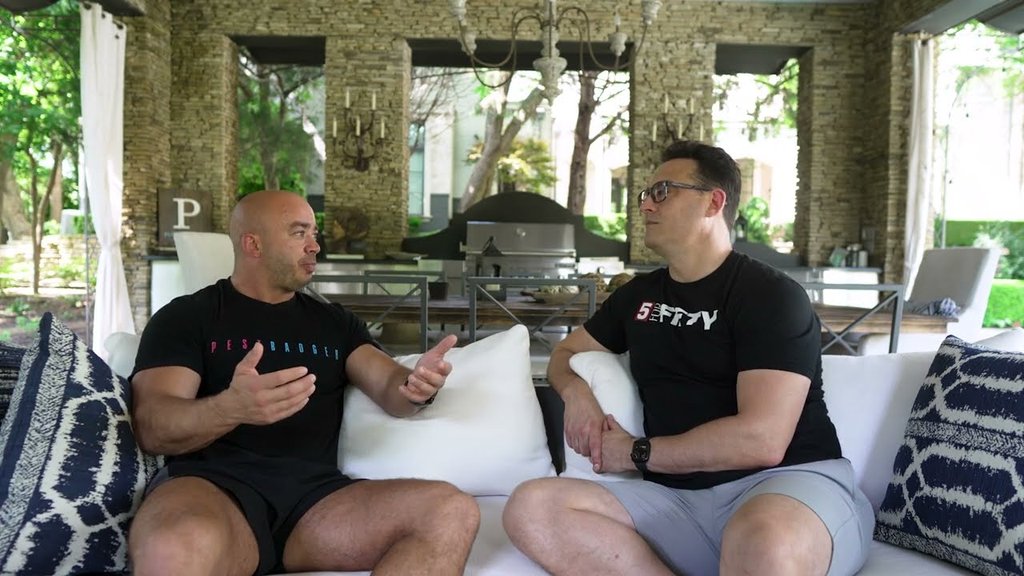
Table of Contents
- Knocking Costs You Time, Not Money
- Start Next Door to Your Customers
- Knock When the Bugs Are Bad and People Are Home
- Qualify Fast and Know When to Walk Away
- Know the Market’s Prices Before You Knock
- Don’t Hold Customers Hostage With a Contract
- Fill Your Second Truck With the Hours You Buy Back
- Frequently Asked Questions
My friend and mentor Jonathan Pototschnik, the Lawn Care Millionaire and founder of CitiTurf, sat down with me to talk about door-to-door. He hears one question all the time. If you don’t have much money, how do you get a service business off the ground faster than 10 years to a million? His answer, and mine, is to knock doors, if you have the courage.
When we recorded this in 2025, we had door-knocked our way to an eight-figure company in about five years. Pest Badger has since passed $20 million a year. We already have our door-to-door pitch, the objections you’ll hear and a day with our sales team on the site. This one is for the owner who is still knocking alone.
This video is part of PCO Tips. For more from Jonathan, read Jonathan Pototschnik on the long game.
Knocking Costs You Time, Not Money
I didn’t come from the door-to-door world. When COVID shut Michigan down in 2020, I drove two hours into Wisconsin every morning and taught myself how to knock doors, mostly from YouTube. I had no customers and no backup plan.
If you’re knocking by yourself, it’s way cheaper than going online. You don’t have a lot of money, but you have a lot of time. If your two or three services take an hour or an hour and a half, you’ve got seven and a half hours left to go get more customers. Use Alex Hormozi’s rule of 100. Do something 100 times a day, every single day, and you’re going to get results. The number one thing you can do for free is knock doors, so knock 100 a day.
The hardest door to open is your own car door, and it doesn’t get any easier. Jonathan remembers sitting in his truck in the warehouse areas of Dallas, finding excuses not to get out, when he knocked commercial doors for his lawn company. It still added a couple hundred thousand dollars of revenue. When I recruit reps, confidence is the biggest thing I look for, and confident kids who don’t care what anyone thinks often sell on day one. But you have to do one thing about 10,000 times before you’re any good at it.
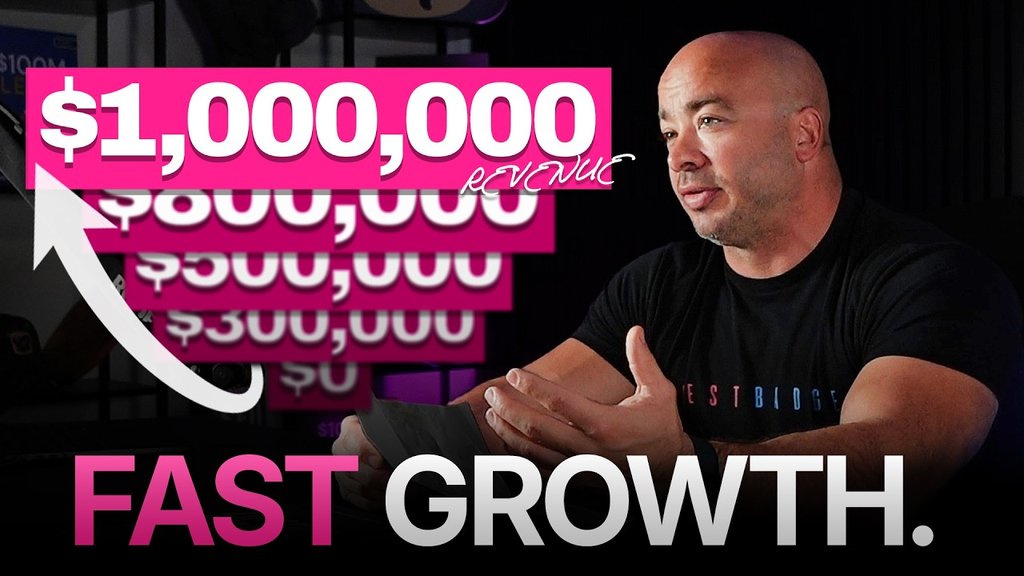
The math changes once you pay reps. Door-to-door is our most expensive channel at Pest Badger, about $480 a customer, because of how we pay our salespeople. We keep doing it because nothing builds a new market faster. It’s a big part of how we took branch 7 from zero to a million in under 12 months.
Start Next Door to Your Customers
If you’re servicing a customer’s house, knock the houses around it. “We were just taking care of Bob. You know Bob, right?” They might not trust you yet, but they trust their neighbor, and they’ve probably seen your truck. “Oh yeah, I’ve seen your pink truck.” Now you have some credibility.
Almost everybody says they’re not interested before they even know why you’re there. “Not a problem. I just left Jones’s house. Let me show you what I’m doing for her real quick. If it works for you, cool. If not, that’s cool, too.” You dropped a neighbor’s name and took the pressure off, and most people will listen a little longer. The icebreakers and the rest of the script are in the pitch article.
PCM member Casey Ashby handles “not interested” in a similar way. He says “Sure,” then asks if they have a company or do it themselves. His intro and the roadmap he memorizes are in his member story.
Knock When the Bugs Are Bad and People Are Home
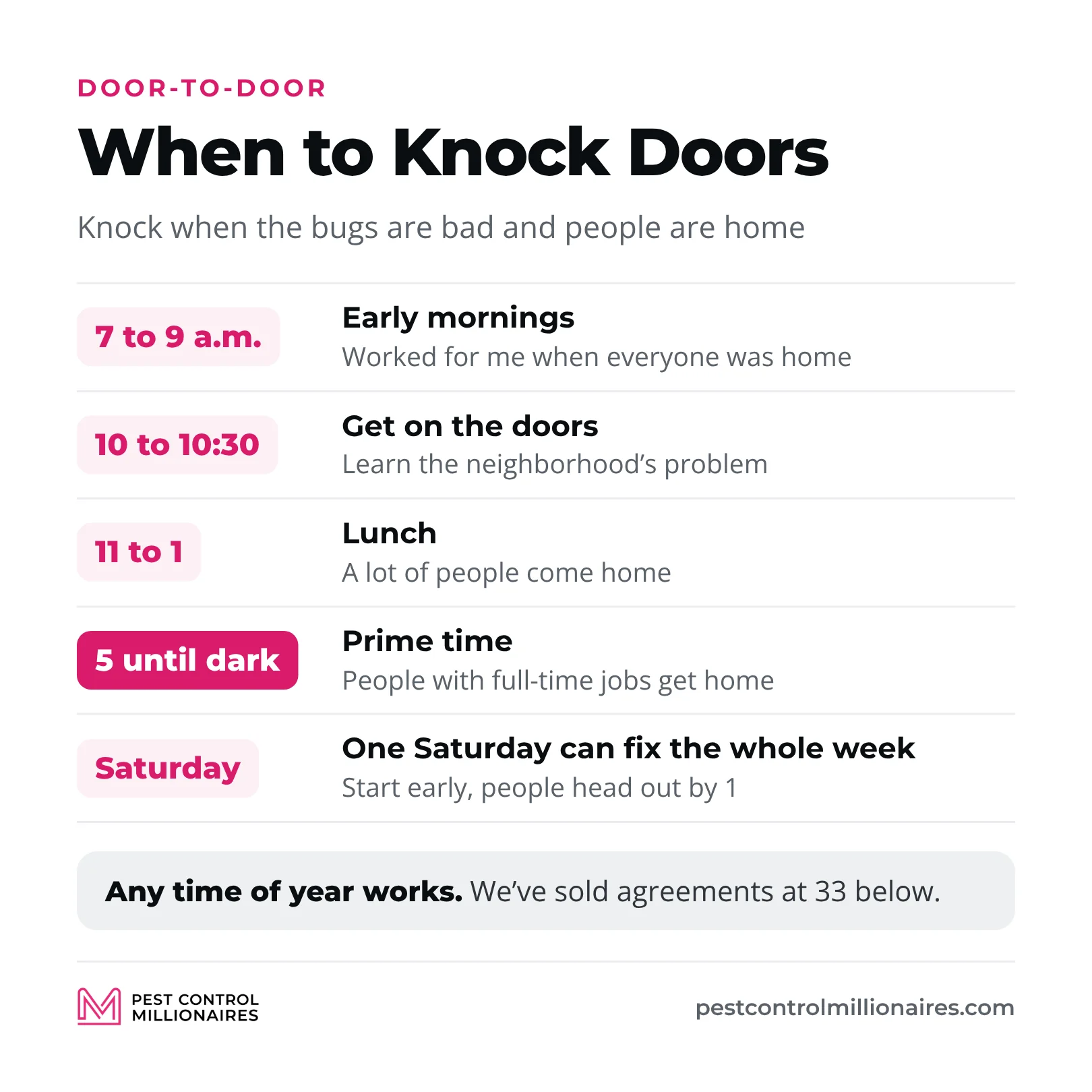
The time of year works like your marketing. Knock when the mosquitoes are out, the wasps are flying, the rodents are coming in, the lawns are growing and the weeds are popping. But you can knock any time of year. We’ve sold agreements at 33 below.
Most people would disagree with me on time of day. Early mornings from 7 to 9 were great for me when I started, but that was COVID, and everyone was home. Lunch is a great window, because a lot of people come home between 11 and 1. Be on the doors by 10 or 10:30 so you can find out what the problem is in that neighborhood, because whatever weed or bug one homeowner is fighting, the neighbors usually have too. Prime time is 5 until dark, when people with full-time jobs get home.
If you have a bad week, one Saturday can fix the whole thing, because everyone is home. Get out early. By 1, a lot of people are off for the weekend.
Qualify Fast and Know When to Walk Away
As Jonathan put it, nobody is afraid of the nice lady who answers the door. They’re afraid of the jerk. But angry people are less than half of 1% of the people you’ll talk to. Our reps have had guns flashed at them, and someone once left our office a voicemail threatening the next guy who knocked. Kill them with kindness, crack a joke if you’re quick on your feet and walk away.
The bigger time waster is the nice conversation that goes nowhere. A lot of rookies think building rapport means talking for 35 minutes. Qualify fast. Do they have grubs or weeds? Do you see bugs? Do they already have a pest control company? If they have no issues, no company and see no value, say have a great day and move on.
And don’t run from the bull, the business owner with the jacked-up truck who comes out saying “What do you want?” Some of our fastest sales ever have come from guys like that, in under 60 seconds. They stick forever and tell their friends, because you stood your ground. You just have to stay in the pocket a little longer.
Know the Market’s Prices Before You Knock
Call around to your competitors before you go out, the big companies included. You have to know your competitors better than you know yourself. We keep spreadsheets on ours with their websites, colors, technicians’ names, service offerings and prices, so we know exactly where our USP comes in.
Then don’t compete on price. I learned that the hard way. People don’t buy off price, they buy off value. We’ll switch a customer from another company and charge them double what they were paying, because they see the upgraded service. Be in the middle of your market or at the top, never the bottom, and if people already know who you are, charge more than everyone else. When we recorded this, my floor for a door-to-door customer was $600 a year, or $150 a quarter, and our average contract ran $600 to $1,200.
Don’t price from your own income level, either. A $1,000 contract can feel expensive to you, but a lot of the people you’re knocking have hundreds of thousands or millions of dollars. It helps to believe in what you sell, so if you own a home, put your own service on it. In our sales meetings we go over five-star reviews, and we have reps watch a service being done.
In the video I called that $600 the customer’s lifetime value. Today I measure a customer by lifetime gross profit, which is about $840 for us, against that $480 cost to get a customer on the doors. Run that math for your own company before you put reps on the doors.
Don’t Hold Customers Hostage With a Contract
A door-to-door agreement technically locks a customer in for 12 or 18 months, because you’re paying your reps on it. We pitch it this way. You got a discount on the initial service, and it comes off at the end if you cancel.
But I don’t believe contracts increase retention. People who want to cancel are going to cancel anyway. Charge them a $150 cancellation fee and they’re mad, you’ll never win their business back, and they’ll talk to 10 other people. Think about how you feel when the phone company says it’s $300 to cancel. I learned this from experience. I just let them go and hope to win their business back. It’s not worth my reputation.
What we do instead is try to see the cancellation coming. When we recorded this, we had just hired a data team to show us which customers are about to churn, so we can email and text them before they cancel.
Fill Your Second Truck With the Hours You Buy Back
Here’s the owner I think about most. He wants to get off the truck so bad, but he’s scared to hire, because he doesn’t know how he’s going to fill the second truck.
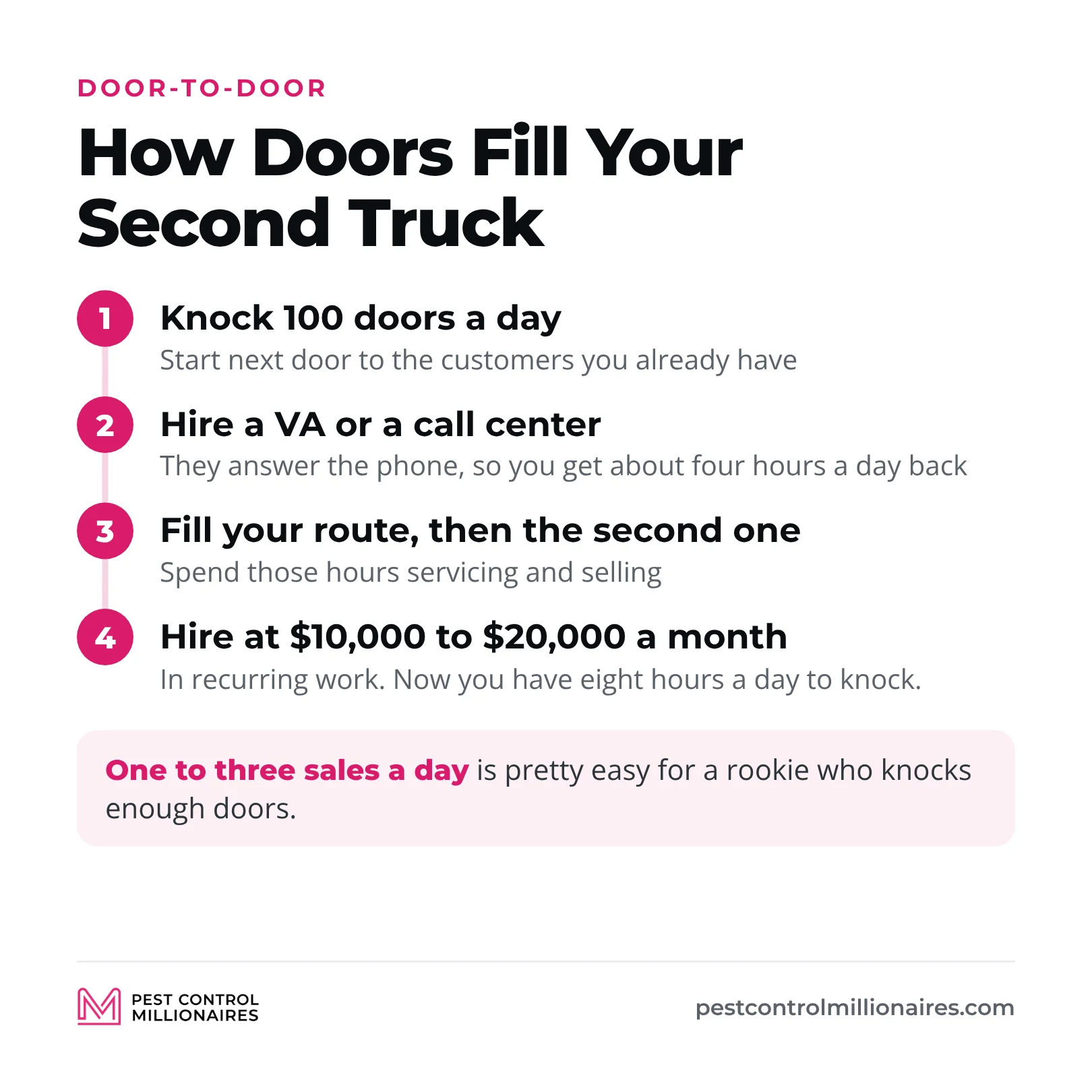
Start by buying back your hours. Hire a virtual assistant or a call center to answer the phone, do some light selling and handle a few objections. Instead of four hours in the field and four on admin, you get those four hours back to service more or sell more. Fill your route, then start filling the second one. Once you’re doing $10,000 to $20,000 a month in recurring work, you can afford to hire someone, and now you have eight hours a day to knock doors. That second truck fills up fast.
If you have a couple hundred bucks, buy door hangers for the houses where nobody answers. Keep them in your backpack, not in your hand. If people see them, the first thing they say is “I don’t want the service, but I’ll take one of those.”
You don’t have to be great. Knock enough doors and one to three sales a day is pretty easy for a rookie. You’ll run into people who say, “My husband and I were just talking about this last night.” At the top end, our best rep sold about $23,000 in one day, 23 or 24 accounts at around $1,000 each. That’s contract value you earn over the year, not that day’s revenue, but it’s still great.
At the end of that first year, I had two businesses, and the new one had more money than the old one in Michigan. Yes, the old one had just gotten through a winter, and I’d used some of its cash, but I saw the model. I always knew I was a good operator. What had been holding me back was my market and my service offering. Once I saw the vehicle that could take me where I wanted to go, I went all in.
Frequently Asked Questions
Is door-to-door worth it for a small pest control company?
Yes, if you have more time than money. When it’s just you, knocking costs your time, not your cash, and 100 doors a day around the homes you already service will add customers. Once you pay reps it gets expensive. Door-to-door costs Pest Badger about $480 a customer, our most expensive channel, but it builds a new market faster than anything else.
When should a pest control owner knock doors?
When the bugs are bad and people are home. Lunch, from about 11 to 1, and 5 o’clock until dark are the best windows, and one Saturday can fix a bad week. You can knock in any season. We’ve sold agreements at 33 below.
What should a pest control company charge on the doors?
Call your competitors first, then price in the middle of the market or at the top, never the bottom. When we recorded this, my floor for a door-to-door customer was $600 a year, or $150 a quarter, and our average contract ran $600 to $1,200.
Do contracts help pest control customer retention?
No, I don’t think so. People who want to cancel will cancel anyway. Charge them a $150 cancellation fee and they’re mad, you’ll never win them back and they tell 10 other people. I’d rather let them go and try to win them back later.