What the Biggest Pest Control Companies Do Differently

Table of Contents
Have you ever looked around your market and wondered how you’re supposed to compete with the big companies? They’ve got 40 trucks and thousands of customers. They’ve got hundreds, maybe thousands, of Google reviews, and they’ve been in your market for over 30 years. Meanwhile, you’ve got one truck.
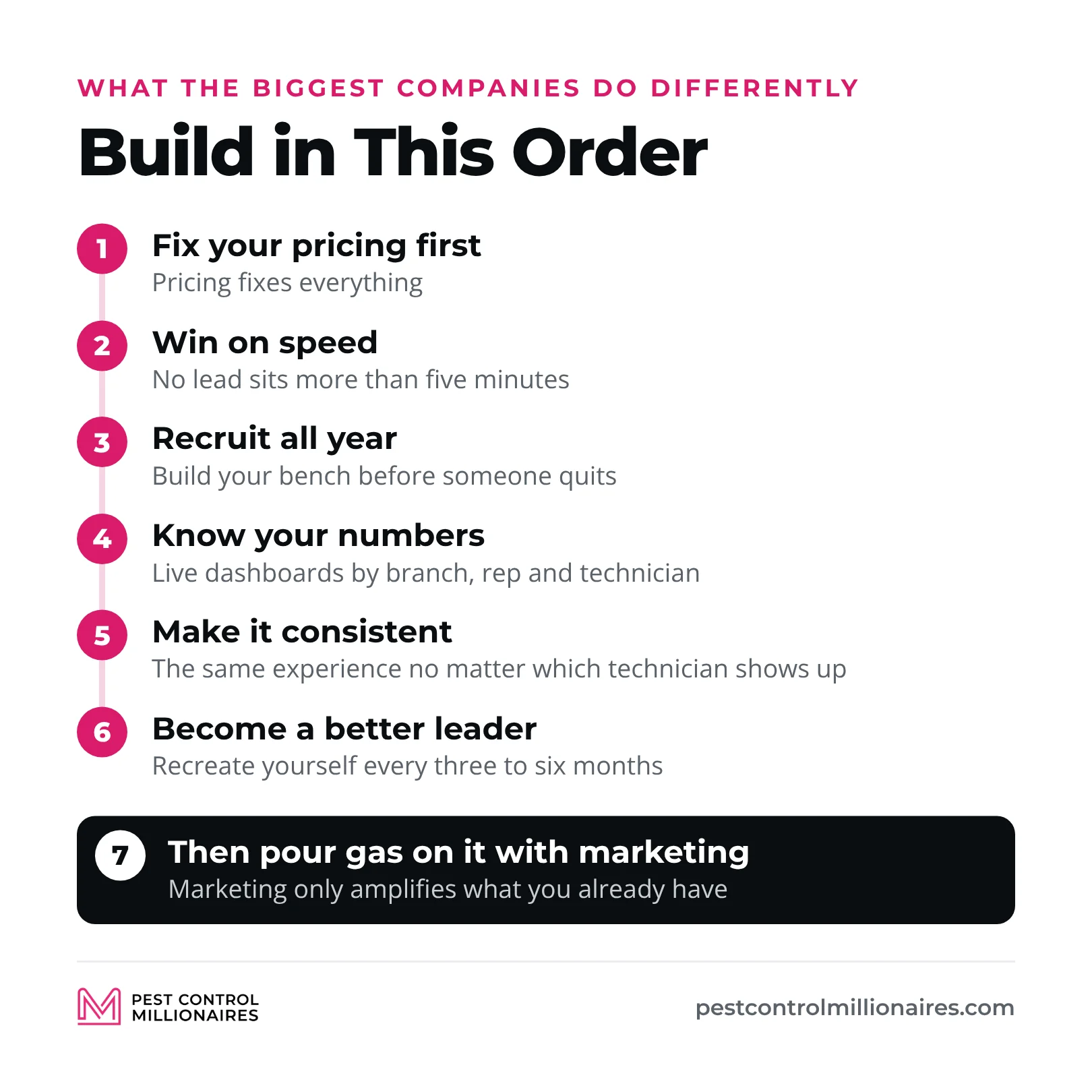
The good news is most of them aren’t nearly as good as you think. In the five years before I made this video in August 2026, I got to visit some of the largest pest control companies in the country. The companies that dominate don’t do 100 things better. They do a handful of things exceptionally well. Here they are, in the order I’d work on them.
This video is part of PCO Tips. For the systems side of growing, read how to scale a pest control business.
They’re Bigger, Not Better
Stop worrying about the companies with 50 trucks. You’re looking at the result of 30 years in the industry, not at what goes on behind the scenes every day. I’ve walked into enough pest control companies to tell you that every one of them has the same problems you do. They’re underpriced. Their routes are inefficient. Their technicians all do the service differently. Their phones don’t get answered consistently.
Yes, they’re bigger than you, but they’re not necessarily better. And if you’re trying to beat them by being a better technician, you’ve already lost.
Fix Your Pricing First
The first thing we look at in any company is pricing. Not because we want to charge customers more, but because pricing fixes everything. When your pricing is wrong, you can’t hire, you can’t market, you can’t invest in better people, and you can’t buy more trucks or equipment or build cash. Profit gives you options.
Most owners tell me they can’t grow because they need more customers. Most of the time, they just don’t have the margins to go get more customers. One of the biggest mistakes I see is owners trying to grow a business that’s barely profitable, pouring customers into a business that can’t support the overhead. Make sure the business is healthy before you step on the gas. There’s no point filling a bucket with customers when there’s a hole in the bottom. I walked through how we set our prices in its own video.
Win on Speed
Once your pricing is fixed, you have a business worth growing. So how do you grow faster than everybody else? Speed. This industry is unbelievably slow. Most companies call leads back hours later, and some wait until tomorrow. By then, the customer already hired somebody else.
At Pest Badger, we built our sales process around one idea, and that’s speed. We call immediately, schedule immediately and collect payment immediately. The fastest company usually wins, not because it’s better, but because customers reward speed. My rule of thumb is that no lead sits for more than five minutes, and every day we track speed to lead and close rate for every rep. Here’s why you’re losing leads in the first 10 minutes.
Recruit All Year
Here’s the next mistake I see everybody make. Owners recruit when they’re desperate, and that’s backwards. If you only recruit when someone quits, you’re already behind. Recruit all year, even when your trucks are full and you have enough CSRs and salespeople. The A players aren’t sitting at home. They’re working for other companies. Talk to them, meet them, network, and you start building your bench.
With a bench, you have options. If you have a B or C player on the team and you find an A player, you can swap them out. Without one, you’re one resignation away from a really bad week or a really bad month. More on hiring A players.
Know Your Numbers
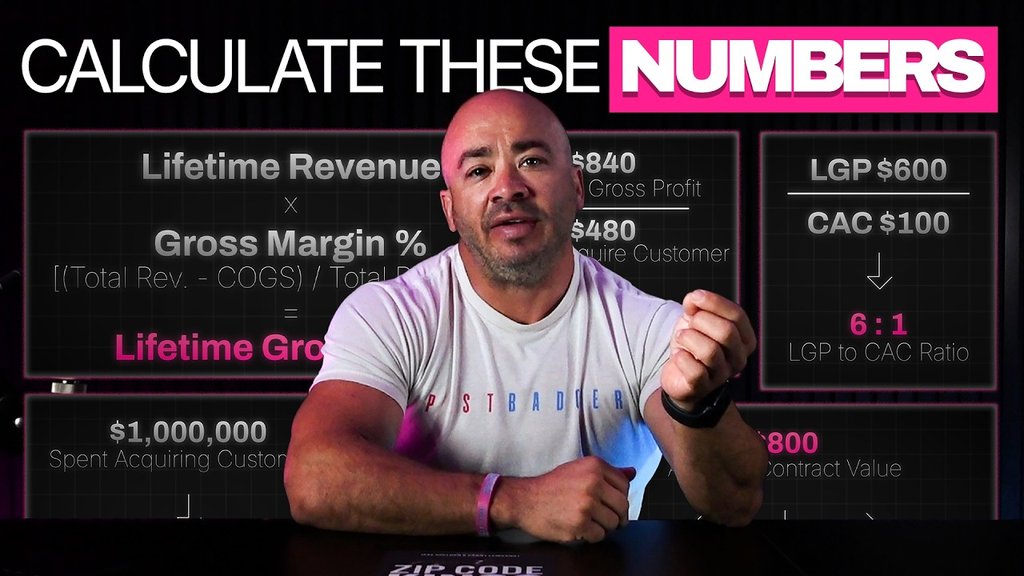
I can’t tell you how many times I’ve asked an owner how they’re doing and heard, “Oh, I think we’re doing pretty good.” I don’t want to think. I want to know your close rate, your cancellation rate, your average revenue per customer, what each technician produces every day and your customer acquisition cost. If you don’t know your numbers, you’re guessing, and you can’t fix what you don’t measure.
So we built live dashboards across the whole company, from HR to finance, operations, sales and marketing. We can see what every branch, rep and technician is doing every day, and which marketing channels are working great, which are failing and which need work. That’s where you have to get to, so your decisions come from the data and not your feelings. Here are the KPIs we track.
Make It Consistent, Then Lead
As you grow, consistency becomes one of your biggest challenges. With one, two or three technicians, it’s easy. With 50 to 100, it’s a completely different game. Every customer should get the same experience no matter which technician shows up. Every phone call should be handled the same way, every lead should go through the same sales process, and every new employee should be trained the same way.
That’s what systems do. A lot of owners tell me they have binders full of SOPs that nobody reads. I don’t buy into that. Systems are simply the best way we’ve found to do something, written down so everyone does it the same way. At Pest Badger, we use training videos, checklists, ride-alongs, role-playing and ghost inspections, and we’re constantly coaching, which includes listening to sales calls and CSR calls. If a technician, CSR or salesperson does something different every time, that’s not a them problem. That’s a systems and training problem.
The goal isn’t to take the personality out of your people. It’s to take out the inconsistency. When your business is predictable, it’s easier to train, easier to scale and easier to deliver a great experience every time.
Once the systems are built, your job changes again. You stop managing tasks and start leading people. You cast the vision, hold people accountable, coach all day and make the hard decisions. If you don’t become a better leader, you become the bottleneck. Every level of growth takes a different version of you. I say it all the time. You have to recreate yourself every three to six months. The skills that got you to $500,000 won’t get you to $2 million, and the skills that got you to $2 million won’t get you to $5 million or $10 million.
Marketing Only Amplifies What You Have
Now you can finally pour gas on the fire. A lot of owners think marketing is the key to growing, and even though marketing is my favorite thing to do in the world, I don’t believe that. Marketing only amplifies what you already have. If your pricing is wrong, marketing won’t fix it. If your phones aren’t getting answered or your technicians aren’t delivering a great experience, marketing can’t fix that either. It will just bring more customers into a broken system.
Once those are figured out, marketing becomes incredibly powerful. Google, Local Services Ads, Facebook, TikTok, Instagram, direct mail, referrals, community involvement. You don’t have to master every channel right away. Find a few you can get really good at that bring in profitable customers, and keep investing in them.
And marketing doesn’t stop when the customer signs up. Every service call is marketing. Every truck on the road is marketing. The companies with great reputations didn’t get lucky. They earned it one customer at a time. Marketing gets the phone to ring. Your people decide whether it rings again.
Your Competition Is You Six Months Ago
The companies that separate themselves aren’t doing one extraordinary thing. They’re doing ordinary things extraordinarily well, over and over. That’s how you build a business that lasts.
When I started Pest Badger, there were already companies in every market we entered. Some had been there for decades, with bigger teams, more trucks and more customers. We didn’t try to beat them at their game. We built a different one. We priced correctly, standardized everything, measured everything, recruited constantly, moved faster and kept improving every day.
So stop worrying about what the biggest companies in your market are doing. They’re not your competition. The person and the company you were six months ago are. Every company becomes a reflection of its owner. Become a better operator, recruiter, leader and salesperson, and the business will follow. Keep getting a little better every day, every week and every month, and one day you’ll look around and realize the company everyone else is trying to catch is yours.
Frequently Asked Questions
What do the biggest pest control companies do differently?
They don’t do 100 things better. They do a handful of things exceptionally well. They price right, move fast on leads, recruit all year, know their numbers, deliver the same experience every time and only then pour marketing on top.
Should you fix pricing or marketing first?
Pricing. When your pricing is wrong, you can’t hire, market, buy trucks or build cash, and marketing only amplifies what you already have. Pouring customers into a business with no margin is filling a bucket that has a hole in the bottom.
What numbers should a pest control owner track?
At least your close rate, cancellation rate, average revenue per customer, what each technician produces every day and your customer acquisition cost. We track them on live dashboards by branch, rep and technician, so our decisions come from the data, not our feelings.
How do big pest control companies keep service consistent?
With systems, which are simply the best way you’ve found to do something, written down so everyone does it the same way. We use training videos, checklists, ride-alongs, role-playing, ghost inspections and constant coaching, including listening to sales and CSR calls.