
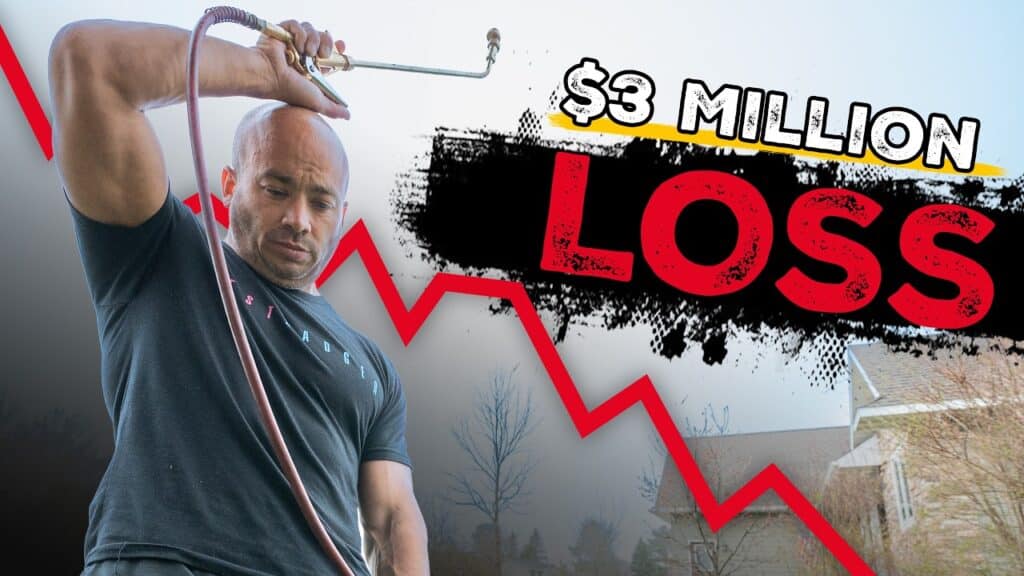
One of the biggest mistakes I’ve made since starting Pest Badger was this. We had a $3 million leak in the business, and it took me way too long to see it.
I’m Jonas Olson, the founder of Pest Badger. I’ve been in the service industry for 17 years, and over the last five years we’ve grown a pest control company from one location to 20 locations across seven states. I use this blog to document how I think about building service businesses and what’s actually working for us. I wish my mentors had documented their journey, so I’m documenting mine for you.
Table of Contents
ToggleThe Leak We Couldn't See
The mistake was simple. We didn’t have a pest control inside sales team. And at the time, it honestly didn’t feel like we had a problem at all.
We had a door-to-door team that was working. We had CSRs answering the phones. Revenue was growing. Everything looked good. We weren’t spending much on ads, maybe a couple thousand dollars a month, so we didn’t have a lot of inbound volume. Most of what we did was door to door mixed with other channels like EDDM and door hangers.
Here’s why it mattered. We had two problems at the exact same time. One, we didn’t have enough of the right leads coming in. Two, we weren’t converting the ones we already had at a high level.
The Moment It Hit Me
In 2022, I was sitting at a Patrick Bet-David conference with my leadership team, going through a leaks and opportunities workbook. I was working through all the leads we had, feeling like we needed some help in that area. And as I went through the numbers, it hit me right then and there.
We had a $3 million leak in the business. And it was all coming from the same place.
Inbound calls weren’t getting closed at the level they should have been. Marketing leads weren’t getting followed up with properly outside of some automation here and there. And the doors would send out a quote, follow up the next morning, and then nothing else happened. No one really owned it.
That was the core of it. When our sales were split between outside reps and CSRs, the lead just sat in the middle and nobody was responsible for closing it. And it’s not realistic to expect the CSRs to chase those leads down. They’re busy dealing with customers all day long. So you lose it.
A Thousand Small Misses
Let me make this real. A homeowner calls in. They’re ready to buy. They found you on Google, they already know they have a problem, they’ve already decided they need pest control. The CSR answers the phone, answers the questions, gives them a price, and then has a hard time closing it.
I’m not saying every CSR is like this. Maybe ours just weren’t trained for it. But closing is a different skill and a different kind of person, and the call ends, and you lose it. Not every time, because some people sign up no matter what since they have an active problem. But our close rate was low.
Same thing with the doors. A rep sends out a quote, follows up the next morning, and then nobody touches that lead again the rest of the year. So you lose those too.
Stack that across a week, a month, a year, and that’s where the $3 million came from. It wasn’t one big mistake. It was a thousand small misses happening at the same time.
Let me make it even more concrete. Say you miss three sales a day at $600 each. Over a month that’s $50,000. Over a year that’s $600,000 in revenue you missed just by not following up on door leads and letting retention slip. And that’s before you even count the upsells you’re missing inside your existing customer base. That’s how it adds up to millions.
What We Did: A Dedicated Pest Control Inside Sales Team
So we fixed it. We built a dedicated pest control inside sales team. Not CSRs. CSRs are completely separate. These people are focused on one thing, and that’s selling and adding revenue.
They close inbound calls. They work every single lead. They exhaust every lead until there’s a decision, yes or no. If there’s no decision, that lead sits there and they keep following up until they get one.
Different Leads Create Different Customers
This is where it got interesting. The inside sales team didn’t just fix the leak. It changed the type of business we were running.
The customers coming through inside sales are just different. They’re searching for you. They’re finding you on Google, on LSA, through your website. They already figured out they have a problem and they’re looking for a solution. They’re not being sold at the door.
Because of that, the conversion is different and the customer is different. They stay longer. They understand the service better. They weren’t promised the world or told they’d never see a single bug, so the retention is stronger.
Compare that to door to door. Door to door still works, and we built a very successful business on it. You can see exactly how we run our door-to-door sales team day to day. But it’s interruption driven. You’re catching someone in the middle of their day, outside doing their thing, and the sale is just different. A lot of that shows up later in the life of the customer.
The Value Gap Between Customers
Take this for what it’s worth, because not every rep is the same. But if you know door-to-door reps, some of them just want the deal. So they discount the first service. They discount the follow-ups. They simplify it. They sell the customer the world and promise they’ll never see a mosquito again, and they sell at the minimum ACV just to get the signature. That pulls your average contract value down.
Yes, you set a floor. But even with a floor, those reps will sell right at the floor.
Inside sales is different. They’re not standing on a doorstep trying to grab a quick yes. They can explain the full service from scratch. They’re not rushing through a pitch. So you can hold your price and actually charge more than most people in the industry can. You sell the right package, your ACV goes up, and you end up with a better customer at a higher value.
Then look at the cost to acquire. The CAC on our inside sales team is less than half of what we see on the doors. If the doors cost you $500 to $600 to acquire a customer, inside sales leads run you $100 to $150. That’s less than half. You’re not running door-to-door teams, the structure is different, so your cost to acquire drops significantly while your LTV goes up at the same time.
That’s when the business starts to change. CAC down, LTV up, and everything gets easier.
Nothing Gets One Shot Anymore
Inside sales doesn’t just close inbound. They follow up on the door-to-door leads that didn’t convert. They work the old leads. They exhaust quotes that never got closed from years past. Nothing gets one shot anymore. Everything gets worked consistently.
Then we added retention, because that was another huge gap. Go back to 2022. A customer would call to cancel, the CSR would process it, and that was it. They weren’t incentivized to hold the customer. They were there to be professional and do what the customer asked.
The retention team is different. They’re incentivized to keep the account. So when someone calls to cancel, they work to save it. They adjust the service plan. They figure out what the customer signed up for in the first place and they resell the value.
Then we added one more layer, and that’s upsells. We didn’t have anyone consistently reaching out to existing customers. Nobody was watching attachment or selling a second service. We’d send a few emails and texts here and there, but nobody was systematically attaching that second service like mosquito or rodent or whatever fits your company. So we were stuck at the same customer value.
Now the inside sales team is reaching out, adding services, and increasing the value of each customer. That drives LTV up even more. Raising your attachment rate across your base compounds on top of everything else. If you can get a percentage of customers to take a second or third service, that alone can mean hundreds of thousands or even millions in revenue.
And the other side of that is keeping the customer. You can grow an account all you want, but if you lose it, none of that matters. That’s where retention comes in. Saving even 5% of churn can add roughly 25% to your bottom line, because getting new customers is way more expensive than keeping the ones you have. So now that same team is driving revenue and protecting it, and they’re incentivized to do both.
Your Backend Has to Keep Up
Here’s where a lot of people miss, and where we missed too. If your backend isn’t ready, more sales can actually hurt you. If scheduling isn’t tight, service slows down and small problems don’t get handled fast enough.
So while we were building the inside sales team, we had to tighten up everything else. Routing, scheduling, communication with the team, all of it had to get better. Sales without operations doesn’t scale. It just creates problems faster.
Ask Yourself These Questions
Here are a few questions to figure out if this is happening in your business right now.
Do you know your close rate on inbound calls from every source? Facebook, Google search, LSA, all of them. You need a close rate for every one. Do you know how fast your leads are getting followed up with? Do you even have a follow-up system? Does anyone own the leads? Does anyone own retention? Does anyone own upsells?
If the answer is no, you’re losing money every single day, the same way we were.
The Real Lesson
Here’s the point I want to drive home. We didn’t just need more leads. We needed to be better with the leads we already had and better with the customers we already had.
That shift was worth millions.
If you want help building this same inside sales engine, retention layer, and backend in your own shop, that’s exactly what we walk operators through inside the Pest Control Millionaires program.
