Mike Andes Built 150 Locations. Here’s What He Taught Me.

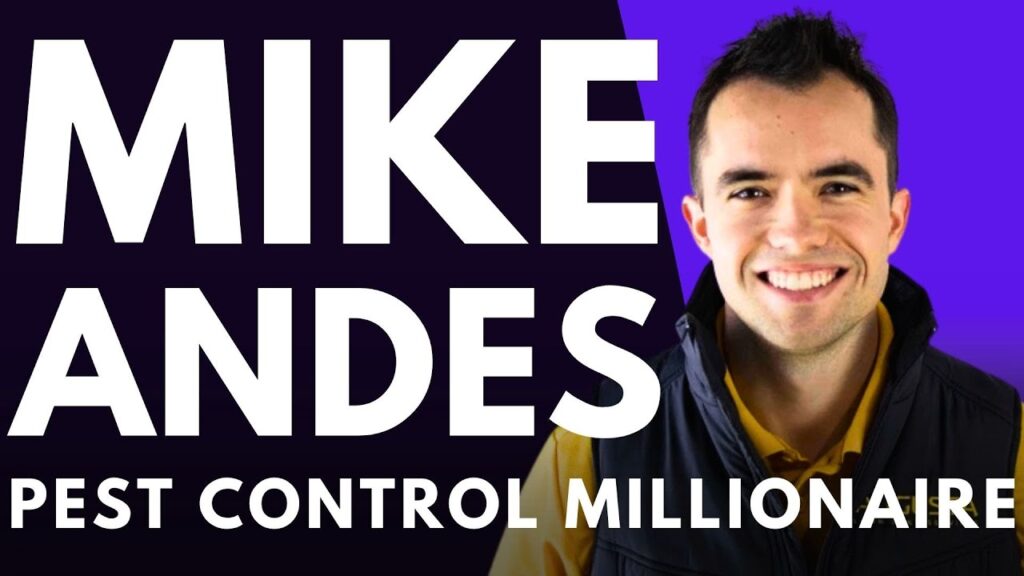
Table of Contents
Mike Andes has built one of the most interesting companies in the home-service world. Mike runs Augusta Lawn Care. They have more than 150 locations. He also built a software company called Copilot, wrote a few books, and has a big YouTube channel.
We went over an hour. Here’s what I keep coming back to.
For another lawn-care operator’s take on scaling, hear Jonathan Pototschnik on the long game, and catch every episode on the Pest Control Millionaire podcast.
The first few years are supposed to feel like a hole
Mike has the best way of explaining the early grind I’ve ever heard. He calls it “dig, build, bury.”
You start by digging. You work more hours and make less money. It feels like you are going backward. Then you build. You pour the concrete and lay the foundation. Then you bury it. You never want to look at those first years again.
As Mike put it, “you’re digging and you’re literally going down, you’re making less money working more hours.” Nobody claps for that part. They only see the building later.
This is why so many people quit. At a normal job, more hours means more money. In business that link breaks. There is no quick feedback loop telling you it’s working. Mike said his first three to five years were just brutal. That matched my own story too.
The point is simple. The pain is not a sign you’re failing. It’s the foundation. The building everyone admires later sits right on top of it.
Pay for performance changed his whole business
This was the big one for me. Mike said pay for performance was the switch that turned his company around.
Before it, he made almost nothing for years. After it, the numbers got wild. As he told me, “we literally went from not making any money the first four years to then 280,000 in distributions to myself, and I was working there like 3% of the time.”
The idea is you pay your crew a percentage of labor revenue, not just an hourly wage. When you do it right, the crew makes more and works faster. He said his teams got 20 to 30% more efficient because they were finally incentivized.
He also gave a clear way to roll it out. Run a two week trial. Let each worker pick between hourly and pay for performance for two pay periods. They will pick the bigger check. After two weeks, take a vote. If they made an extra thousand bucks, they vote for it.
One warning he gave, and I learned this the hard way myself. Don’t start the trial during a week with a holiday. The short week makes their check look small. Pick a normal time of year so the math works in their favor.
Don’t franchise just for the money
Mike is a huge fan of franchising. He also told most of the audience not to do it.
Here’s why. He said about 98% of franchisors never get past 100 locations. Most fail. They think they can throw together some legal docs, sell licenses, and collect checks. But running a real franchise costs a fortune for years. You have to keep building better systems and software. If you cut corners on support, people stop joining, and you stall out.
So why does he do it? Not for fast cash. He said corporate locations made him more money than the franchise did for the first few years. He franchises because his goal is to change how professional the lawn care industry is. He wants a thousand locations and real impact.
His advice was clear. If you just want more money, scale it yourself or do licensing. Only franchise if you have a mission bigger than the money. He compared a franchise to a marriage and licensing to dating. The marriage is harder because you’re locked in together and have to make it work.
Bet on technology, because labor keeps getting more expensive
Mike spent millions building an AI tool he calls Max. The logic behind it is what got me thinking.
He laid it out plainly. Labor keeps getting more costly. Rent goes up. So does most everything tied to a human. But “the cost of technology is deflationary, it goes down over time.” So he wants to ride that wave before everyone else does.
The phone math is the part I keep repeating. He said, “if you’re open for, say, 40 hours out of the week in your office, that means there’s 128 hours in a week. There’s no one answering the phone” for more than 70% of the week. And of the people who call after hours, only 37% leave a voicemail.
Max answers those calls and grabs the lead info. He said over 70% of callers will talk to Max and leave their details. Just doing that bumped their lead count by about 15%. He even sees it in the data. Across the industry, leads are down around 15% year over year. Augusta is up a little.

He thinks in five years, an AI taking calls will be normal for any service business. He wants to be three to four years ahead of everyone.
Own your mistakes out loud
This part earned my respect. The Copilot software rollout was a disaster, and Mike said so on the record.
He let too many users in too fast and broke the systems. People left. He didn’t dodge it. As he said, “no one cares. I messed stuff up. It was all my fault.”
He shared a number he’d never said in public before. “Our churn went up to as high as 12% every month, which means basically in eight months we would have lost all our users.” They lost about half their users. He said he deserved to lose all of them.
Now churn is back down to 2%. What I took from this is that owning a public failure builds more trust than pretending you’re perfect. People stuck with him because he was honest about the mess.
Fix your worst quarter
Mike pushed me to look at my profit and loss by quarter, not just the year.
In the green industry, Q4 is the killer. People lay off crews. They run low on cash in winter. He guessed most lawn businesses are around 20% profitable for three quarters, then one bad quarter drags the whole year down to four or five percent.
His fix is season specific offers. Augusta is going all in on Christmas lights, with a whole new brand and trademark. The goal is to turn the slow quarter into another rush. Then you head into spring with cash in the bank instead of scrambling.
The lesson works for any business, not just lawn care. Find the quarter that’s bleeding. Build an offer made for that season.
The one piece of advice that stuck
I asked Mike for the best advice he’s ever gotten. His answer was about effort.
He said most people have no idea how much work it takes to be exceptional. “The amount of effort and energy and sacrifice required to make that happen is 10 times, 100 times what you think it is.”
His point was that the only thing between where you are and where you want to be is skills. To get skills you need knowledge. And the way you get knowledge is by pulling it out of other people’s heads, through books, podcasts, whatever you can find.
That’s the whole reason I do this show. Talks like this one with Mike are how the knowledge moves from his head into ours. Go listen to the full episode if you want the rest.
Watch the PCM Podcast on YouTube