

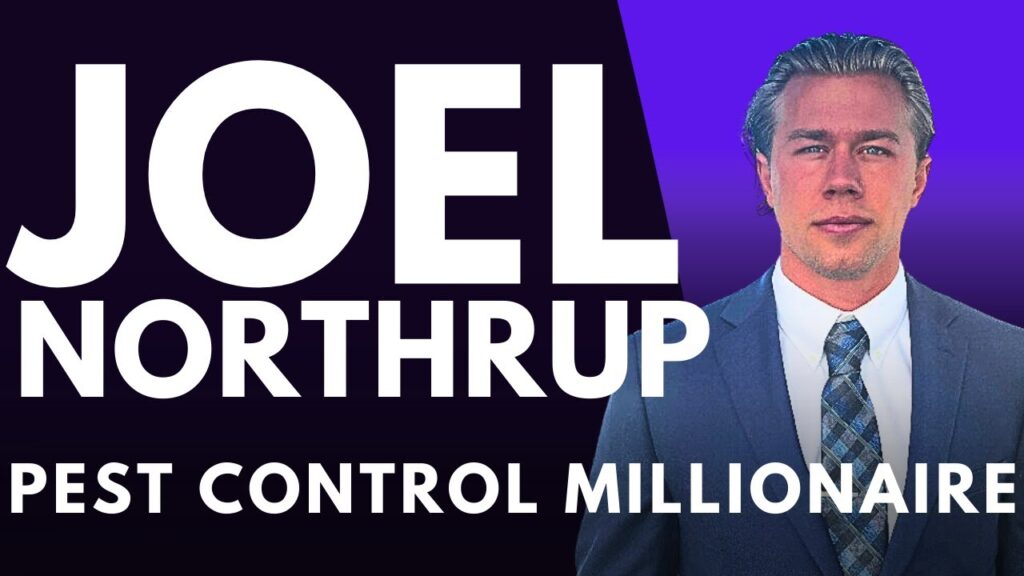
Joel Northrup has packed a lot into a short career. Joel started a lawn care company with his brother back in high school in Cedar Rapids, Iowa, and they sold it in 2019. Now he runs a software company that helps lawn and pest companies measure lawns and sell services online, and I use his stuff myself.
Joel has done a lot in a short time, but I don’t want to walk you through his whole story. I want to focus on the ideas that stuck with me, so here they are.
This episode is part of the Pest Control Millionaire podcast. For another lawn-and-software success story, hear Jonathan Pototschnik on the long game, focus, and not selling.
Table of Contents
ToggleRoute density beats new markets
This was the biggest one for me. Joel’s company grew fast, but they grew the wrong way.
They jumped into new towns before they owned the towns they were already in. “We expanded too soon and we didn’t have the density so our technicians were driving all the time. There was just way too much time spent behind the windshield,” Joel told me.
That drive time kills you. Your trucks burn gas, your guys waste hours, and you serve fewer lawns each day.
As Joel put it, “density, route density is probably the second most important factor besides pricing.” Only price matters more than that.
So what would he do now? He’d pick one fast-growing market and own just a few neighborhoods in it, not the whole city. Build it tight in one suburb at a time, and then grow from there.
Keep your trucks and gear cheap
The new mowers and spray rigs keep getting bigger, and bigger gear means a bigger truck and a bigger trailer. It all adds up fast.
“Before you know it you’re putting $150,000 into each of your crews,” Joel said. The money can still work, but why spend that much if you don’t have to?
If he went back in, he’d go small with something like a Ford Maverick, F-150, or Ranger. He said you can buy a new Maverick for about $22,000. Small gear means lower cost and a better return on what you spend.
Robot mowers pay off on commercial, not homes
A lot of folks ask about robot mowers, and Joel has run them. He sold robotic auto mowers and even tried to build his own robot.
His take is simple. The profit isn’t really there on home lawns yet, but it is strong on commercial.
Big commercial sites want to go green, and they track that stuff, so electric robots help them and pay you. If he chased robots, he’d chase commercial work, and for homes he’d stick to fertilizer and weed control.
Make it easy to buy
Joel built his whole business around one idea. People want to buy fast and on their own.
He told me about a study he came across. “35% of buyers want a buying experience without a salesperson,” he said, and with younger buyers that number climbs past half.
Think about how you shop now with Amazon and Uber, where you don’t want to call anyone. Your customers feel the same way, but most lawn and pest sites still make buying hard. They hide the price, they make you fill out a form, and then they say they’ll contact you. That feels like a brush-off.
If someone is ready to buy, just let them buy.
Speed to lead wins the job
This goes hand in hand with the last one. Back in his lawn care days, his small office team couldn’t quote fast enough.
The customer would fill out a form, they’d write it down, and they’d call back later that day or the next week. By then it was too late, and the customer had already signed up with a big national brand.
The fix is speed. Get a price in their hand right away, and then call fast.
Here’s the data behind it. Through his online tool, about 20% of people buy the first time through. Call them inside 5 to 10 minutes and you can hit 50 to 60%. He’s even seen 80%, though he warned that 80% means your price is too low.
He also shared a number that stuck with me. After five minutes with no contact, you lose about 70% of those leads. Five minutes is all it takes.
Don’t blow up your pricing page
Joel sees where people quit, and a lot of them quit on the price.
Two things cause it. The first is price shock, because when you show a big yearly number people freeze. Show a per-month or per-application price instead.
The second is too many choices. Some companies list 25 services, and the customer gets confused and leaves. Keep it to about three programs, tag one as most popular, and add a couple of add-ons.
Give a marketing effort real time
This one is about patience. Most owners try something for a month, it doesn’t pop, so they quit and chase the next thing.
Joel did this too early on, and he had to train himself out of it. “Nothing works after month give it six months to a year go all in on that one thing,” he said.
New tools and new channels hurt at first, and there’s real pain in the switch. Push through it, and then check the results.
Read more than you think you need
One last thing I liked. Joel reads a lot, and he can feel it when he stops.
“If I don’t read a lot I can even tell my verbal IQ, the words I use, it all becomes dumber,” he said.
We all stare at screens all day, and short videos hijack your brain, but reading pulls it back. His favorites outside the Bible are Crime and Punishment, Zero to One, and Antifragile.
My takeaway
If I had to keep it short: own your backyard before you chase new ones, spend less on trucks, and make buying easy. Call fast, keep your prices clear, and stick with things long enough to know if they really work.
Good talk, Joel. Thanks for coming on.
