

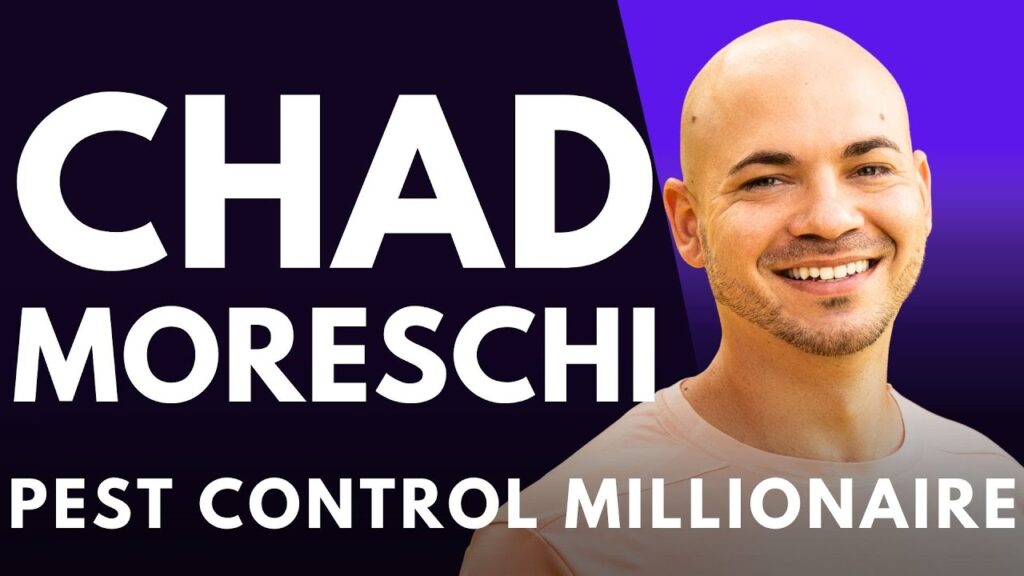
Chad Moreschi runs Natural Resources Organic Pest Control down in Miami. His parents started the company back in 1986, and his brother Chris later built Gorilla Desk. So Chad has been around pest control his whole life.
But Chad took a different road than most owners. He didn’t chase a giant empire. He built a business that fits the life he wants, and it runs really well. Here’s what I keep coming back to.
This episode is part of the Pest Control Millionaire podcast. For another take on building the right kind of company, see what Chase Goodeill taught me about building a pest control company.
Table of Contents
ToggleRevenue doesn’t tell the real story
A lot of owners brag about revenue, but Chad doesn’t. He looks at profit and at how his people are doing.
“Revenue doesn’t really tell you the story of the business and if it’s healthy or if it’s profitable,” he told me.
He’s right, and I learned this the hard way too. Early on I pushed to hit $1.2 million, and I felt broke and stressed the whole time. Big top-line numbers don’t pay you. Cash in the bank does.
Chad keeps cash on hand on purpose. At year end he buys new gear, sends his trucks to the body shop, and fixes the dents and scratches. He even redoes the emblems so his stuff always looks good. You can’t do any of that when you’re chasing revenue and running on empty.
He stopped trying to “blow it up”
For a while Chad felt the same pressure we all feel. How many trucks? How big? When are you going to franchise?
He almost fell for it and thought about opening offices all over town. Then he stepped back, because that wasn’t the life he wanted. Here’s the part I loved: once he dropped that pressure, the whole thing opened up.
“I could be as creative as I wanted, and I could put myself into this business and have it be more of a reflection of me,” Chad said.
He read E-Myth, like a lot of us, and it helped him switch his identity from tech to owner. Then he asked the real questions. What do I want this to look like, and how do I want it to serve me, my family, and my team?
When you build it right, you might feel guilty
This one surprised me. Chad got the freedom he wanted and the business runs without him, but then the guilt hit.
“The freedom gave me guilt, which was like a weird thing to think about,” he said.
He could take a day off and not touch a thing, and everyone’s happy and the work still gets done. But he felt bad enjoying it. His brother gave him good advice, which was to stop worrying about what other people think.
I told Chad the same thing my mentor told me. When the business runs without you, that means you built it the right way. That’s the goal, not the problem.
Going organic is a premium play
Chad’s company leans all the way into organic, and most of his lineup is 25(b) products. For general pest work he uses plant-based products, so it’s clean stuff. This isn’t just a feel-good thing, it’s smart business. He’s a more premium company, and people pay more for it.
Parents don’t want toxic stuff around their kids, and pet owners don’t want it around their dogs. Folks down there also want to protect the bees and butterflies, and Chad sells to all of them.
And the work still holds up. If you’re thorough and you pay attention, the 25(b) stuff works. The result is less toxic product, a higher price, and customers who feel good.
For Chad, clean products are personal. He had thyroid cancer in 2017 and had his thyroid removed.
“It was all because of the accumulation of heavy metals and all this, organ phosphates and stuff I was exposed to as a kid,” he said.
He rode with his dad as a kid, and they spread fertilizer and sprayed strong chemicals. Back then PPE was use it if you want, and years later it caught up with him. So when Chad talks about clean products, he means it. It protects his techs, his customers, and their pets too.
His mosquito setup is worth copying
Chad runs a smart mosquito program with three products and three different modes of action. He says he’s one of the only companies down there doing it that way.
He uses misting, In2Care traps, and granular Bti. The traps cost a lot, so he made them an add-on. If you want a more robust treatment, he adds the traps for $25 a pop, which takes no time and bumps his profit on the service.
He also sets the right expectations up front. He’ll pull up the property on Google Maps, and if you’re next to a canal or brackish water, he tells you straight. That kind of honesty saves a lot of callbacks.
The Covid pivot that freed his schedule
Most of Chad’s revenue used to come from monthly service, and he did inside and outside every visit. Scheduling was a pain because people had to be home.
When Covid hit, he made a big change. He went to perimeter service with inside as needed, dropped monthly, and moved to bi-monthly and quarterly. He also fixed his pricing.
“By switching to bi-monthly and quarterly I freed up 30 to 40% of our schedule,” Chad said.
That’s huge. He used the open time to tighten his routes, then gave his techs room to take on more work. He also priced each stop so a callback doesn’t cost him money. Before, it did.
The team comes first
In a lifestyle business, your people are everything, and Chad gets that. Losing techs is one of the biggest pains there is, so he keeps his team happy and protects them. If someone is rude to his staff, yells, or curses at them, they’re gone.
“I have a zero tolerance policy for that kind of stuff, and the staff loves that, and I have their back on that,” Chad said.
His team documents everything, and with the new phone system, calls get recorded. If a customer is nasty on the phone, they note it, and then Chad decides if he even wants that account. He doesn’t want a tech dreading the day over one bad name on the schedule. I felt that one, and nobody should.
My takeaway
Chad proved something a lot of owners miss. You don’t have to go huge to win, and a clean, focused business with strong profit is a great place to be. His techs are home by five, his customers are happy, his trucks look new, and he gets his time back.
If you’re doing solid numbers and making good money, you don’t have to grow. Sometimes the smart move is to sit right there and build it better.
