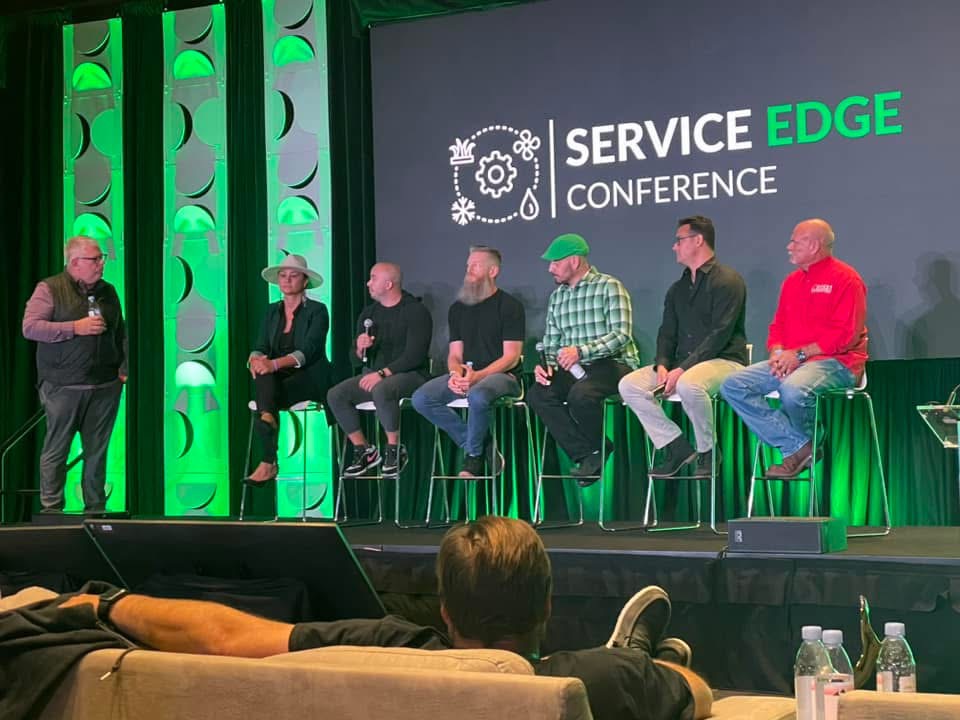

I recently sat down with Walker Rose, founder and president of Turf Chief out of Louisville, Kentucky, and his story is a great example of what happens when you stay patient, stay hungry, and keep grinding even when the early years feel like they’re going nowhere. Walker started in landscaping right out of college, built his way up to over $2.5 million a year across his companies, and along the way learned some hard lessons about marketing, acquisitions, and what it actually takes to build something lasting. He’s been in the program for a while now, and the results speak for themselves.
Dropping Out to Cut Grass
Walker was studying civil engineering in college when he realized it wasn’t for him. He’d been doing landscape work during summers and actually enjoyed it. He started watching YouTube videos from Jonathan Potoshnik, one of the big names in the lawn care space, and something clicked. Jonathan showed him that real money could be made in this industry, and that you didn’t have to settle for small thinking.
When Walker told his dad he wanted to drop out and start a lawn care business, his dad’s take was pretty reasonable. If you can just do $100,000 a year, you’d probably be in a pretty good spot. Walker’s response? “No, I want to do a million.”
His dad thought that was a stretch. But Walker had already started absorbing everything he could about running a business, and he wasn’t going to let anyone talk him out of it. He left school, started working for a buddy whose dad owned a landscape company, and launched his own operation at the same time.
The Grind of Year One
The first year was tight. Walker worked four days a week for the other company and one day on his own, plus weekends. He did about $60,000 in revenue that first year and paid himself around $12,000. He got married that same year. It wasn’t glamorous, but it worked.
His first hire was his brother, who is still with him today. From there, Walker just kept pushing. He didn’t have mentors pointing him in the right direction. In fact, the people he knew in business actually tried to talk him out of it. “They told me it’s too competitive, you can’t make money in it,” Walker told me. He ignored them and kept going anyway.
It took about six years to hit his first million. Then he sat right around that number for a few years before breaking through. That’s when things started to get interesting.
Splitting Into Two Brands
Walker’s original company, Local Lawns, was built around landscape maintenance, mostly in the commercial space. But he started getting drawn to the fertilizer and weed control side of the industry. The scalability was what caught his attention. You can generate way more revenue per employee doing fert and weed control than you can mowing grass. So about three years ago, he launched Turf Chief as a separate brand focused on lawn fertilization, weed control, and mosquito management.
Right now the split is about $2.1 million on the landscape side and around $400,000 on Turf Chief. Walker wants to see that even out as quickly as possible, and the way things are trending, it’s going to happen.
He’s also shifted his focus toward residential customers. Commercial is steady and low maintenance once you land it, but residential has a much bigger client base and customers there value the relationship more. “It’s not just a pure dollar driving their decision,” Walker said. Commercial clients will drop you the second someone undercuts you on price. Residential customers stick around because they trust you.
Burning $100K on Marketing Agencies
Before Walker figured out what actually works for marketing, he spent well over $100,000 with marketing companies and got almost nothing back. One agency took $40,000 from him and landed exactly one job. That’s it.
The leads he was getting were mostly garbage. He’d call them and get someone from a different state who had no idea who he was. The agencies always had an excuse. Let’s test this. Give it another week. Walker tracked the ROI and it was almost nothing.
Looking back, the problem was pretty clear. The ads had a cookie cutter feel. Same images, same copy you’d see from a thousand other lawn care companies. Nothing attention grabbing. And on top of that, the agencies wanted to focus on brand awareness campaigns, which sounded nice but didn’t bring in any actual customers.
Walker also learned a hard lesson about control. If you’re paying an agency and you don’t have access to your own ad account, you don’t actually know how much is going to ads versus how much is going to their pocket. That’s a huge red flag, and it’s the first thing he’d watch out for now.
How the Program Changed Everything
Walker joined Pest Control Millionaires and started working closely with Jake on Facebook ads. Jake showed him how to actually create ads that work, walked him through what stops people from scrolling, and taught him from his own track record what gets results.
The difference was night and day. “I had spent well over $100,000 with marketing companies with almost zero return,” Walker told me. Then he learned how to run the ads himself and started making money. “I’m just a guy that can cut grass and treat lawns, but I can run these ads and make money. That’s silly, right?”
Now Walker runs all the marketing himself. It doesn’t take a ton of time, and he actually knows what’s happening with every dollar he spends. He said it’s the best money he’s ever spent on marketing, and he means that compared to everything he tried before.
The other big benefit is that now if Walker ever does decide to hire someone or bring in an outside agency down the road, he knows exactly what good looks like. He can vet them, ask the right questions, and call out bad work immediately. That knowledge alone is worth more than the leads.
Getting Known in Louisville
Walker’s approach to building the Turf Chief brand locally is smart and sustainable. He’s not trying to go national or expand into new markets right now. He’s focused on owning his immediate area first.
One of the best things they do is work with youth sports. Turf Chief donates lawn care services to youth athletic fields in the area. It doesn’t cost them much to do it, and the community benefit is real. There’s not a lot of funding out there for turf grass management on kids’ fields, so Walker fills that gap. In return, they get banners up on the fields and shout outs on the teams’ Facebook pages. There’s a youth football field near them with 500 to 600 families showing up on weekends. The fields look great, the Turf Chief name is everywhere, and the word spreads naturally.
Walker also turns down work when it doesn’t make sense for the customer. If someone calls and the service they need isn’t actually right for their situation, Turf Chief will steer them in the right direction instead of just closing the sale. “We turn down work all the time because it’s not what’s good for the client,” Walker said. That kind of honesty builds a reputation that no amount of ad spend can buy.
Five Acquisitions and Counting
One of the most impressive parts of Walker’s journey is that Turf Chief isn’t the only company he’s built. He’s acquired five companies total, including Dale Cove, a landscape company he picked up this spring. That one was the biggest acquisition he’s done, and it’s where Jonas really came in handy.
Jonas helped Walker think through the deal creatively. The numbers looked good on paper, but Walker kept feeling like something was off. Jonas would go back and forth with him, challenge his thinking, and help him work through it until they landed on a structure that made sense.
The deal itself was creative. Walker did no money down, used a holdback with the seller to satisfy the equity requirements for an SBA loan, and negotiated the equipment purchase separately to keep the numbers comfortable. “The sky’s the limit really with how you structure it,” Walker told me. He doesn’t come from money and doesn’t have millions backed behind him, so he’s had to get creative every single time.
For future acquisitions, Walker likes the sweet spot around the million dollar mark, but he’s especially drawn to one-man operations in the fert and weed space. A guy cranking out 300 to 500 clients who’s looking to retire doesn’t always need a big chunk of change up front. Those deals have the most room for creative structuring. The bigger you go, the less flexible the other side tends to be because they have lawyers and they know what their business is worth.
As for how he finds these deals, Walker has never actually gone looking for them. They just show up. Being active in the community, going to supplier events, talking to other contractors, building a good reputation. When someone is ready to sell, they want to hand their business to someone they trust. Walker has spent years building that trust, and it pays off.
Hiring and Culture
Walker has had his share of bad hires, but he’s learned to trust his gut. When he’s interviewing someone, he’s not looking at their resume first. He’s looking at their integrity, their honesty, and their attitude. “Most of the skills you can train,” Walker told me. But if someone has a bad attitude or doesn’t fit the team, no amount of skill is going to save it. One bad seed drags everybody down.
Building culture at Turf Chief comes down to treating people like people. Walker makes a point to have conversations with his employees that go beyond work. Ask them about their kids, their hobbies, what’s going on in their lives. It takes five minutes, but it shows them they’re more than just a number. “If you treat people right, I find the majority of the time they treat you right,” Walker said. His brother has been with him since day one, and that kind of loyalty doesn’t come from nowhere.
Staying Hungry
Walker talked about something that a lot of business owners don’t want to admit. Last year, he felt like he got a little complacent. The business was doing well, things were stable, and the drive to push harder started to fade a little bit.
He caught it and course corrected, but it was a good reminder. “Don’t get complacent,” Walker told me. He’s a guy who needs a goal to chase. Without one, he starts to drift. The fix for him was getting back to basics. Taking care of his mental health, making sure he’s physically in good shape, and setting clear goals to go after. When your body and mind are right, the motivation follows.
Key Takeaways
Walker’s story spans over a decade of building service businesses from the ground up, and there’s a lot to learn from it. First, think big from the start. Walker told his dad he wanted to do a million when most people in his world would have been happy with $100,000. That mindset set the tone for everything that followed.
Second, don’t trust marketing agencies blindly. Walker burned through over $100,000 with agencies that delivered almost nothing. The best move was learning how to do it himself, even if it meant starting from scratch. Now he knows exactly what good marketing looks like and can spot bad work immediately.
Third, get creative with acquisitions. Walker has bought five companies and not one of them was a straightforward deal. No money down, holdbacks, creative financing. When you don’t have a ton of cash behind you, creativity is your biggest asset.
Fourth, own your local market before you think about expanding. Walker isn’t trying to go nationwide or jump into new cities. He’s focused on becoming the trusted name in Louisville first. Youth sports sponsorships, community involvement, turning down work that isn’t right for customers. All of it builds a reputation that compounds over time.
And finally, hire for character, not just skills. The best employees Walker has are the ones who fit the culture and treat people right. Skills can be taught. Attitude and integrity can’t.
From dropping out of college to cut grass to running a $2.5 million operation with multiple brands and five acquisitions under his belt, Walker’s story is proof that patience, persistence, and a willingness to keep grinding will get you where you want to go. He’s not done yet, not even close.
Want to connect with Walker? You can find Turf Chief on Facebook and Instagram. You can also find Local Lawns there as well. And if you’re looking for the kind of hands on guidance that helped Walker finally crack the marketing code after burning through $100K with agencies, that’s exactly what Pest Control Millionaires is built to do.