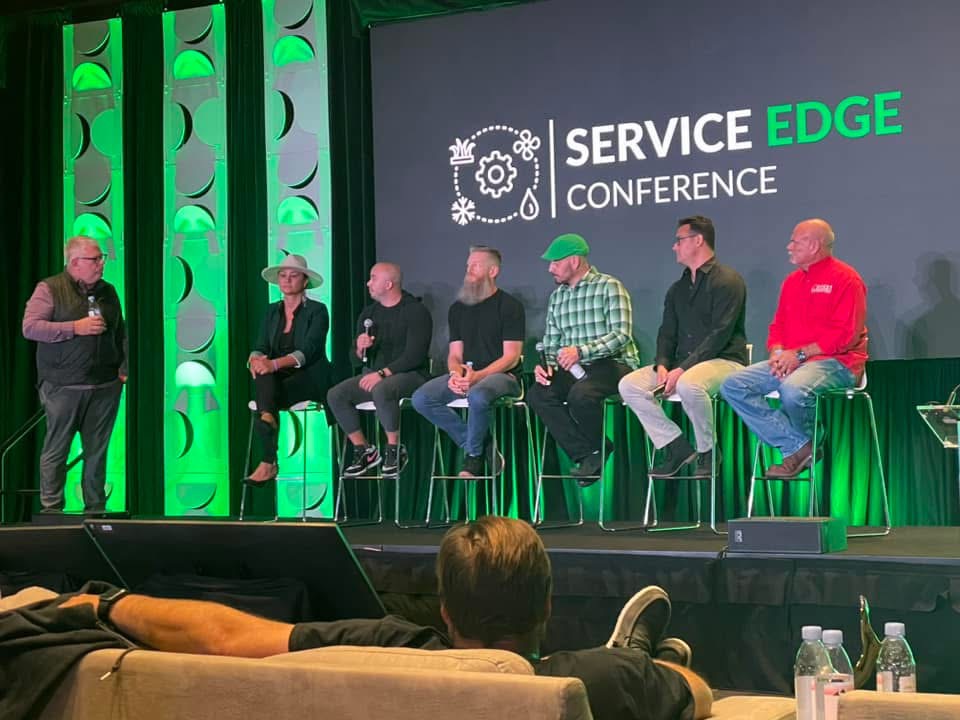
Most pest control owners are flying blind. They’re working 60-hour weeks, running routes, answering phones, doing estimates, and at the end of the month they have no idea if they actually made any money. They don’t know their customer acquisition cost. They can’t tell you their close rate. They have no clue which technician is profitable and which one is bleeding the company dry.
I’m in my data dashboard probably ten times a day. All day long. I know my click-through rates, my cost per conversion, how every ad is performing. I know which technicians are crushing it and which ones are coasting. I can tell you our profit margins by branch, by service, by month.
You know what happens when you don’t track this stuff? You burn money. You hire the wrong people. You keep underperforming technicians way too long. You don’t know when to raise prices. You can’t tell if your marketing is working. You’re just guessing.
Running a pest control company without KPIs is like driving cross-country with no dashboard. No speedometer, no fuel gauge, no GPS. You might get there eventually, but you’re going to waste a ton of gas and probably end up on the side of the road somewhere in Nebraska wondering what happened.
At Pest Badger, we’ve built a $10 million company by obsessively tracking the right numbers. Not just tracking them, but actually using them to make decisions every single day. In this guide, I’m going to walk you through exactly which KPIs matter, how to track them, what the benchmarks are, and how to use this data to actually grow your business.
Weekly vs Monthly Metrics: What to Watch and When
I track everything weekly and monthly. We have a data box I’m looking at all day long. You can see every ad that’s running, all the dollars being spent, click-through rates, cost per conversion, everything.
This is where most people go wrong. They’re winging it. They don’t know their numbers. They’re not tracking anything. Then they wonder why they’re not growing or why they’re bleeding cash.
The Daily Dashboard
The metrics I watch on a daily basis are all about marketing performance. What ads are working? What ads aren’t working? Which campaigns should we push more money toward? Which ones should we pull money back from?
I’m checking this stuff constantly because if you’re not watching it daily, you can burn money fast. Some locations are naturally going to have higher customer acquisition costs because there’s more pressure in the market, more people bidding higher, spending more money. But you need to know that in real time so you can adjust.
Weekly Metrics: The Non-Negotiables
On a weekly basis, here are the big ones you need to be watching:
Leads versus sales. How many leads came in, how many actually converted to customers. This tells you if your sales process is working.
Close rate or closing percentage. This is huge. I like to see that pest control conversion rate at 50 percent or higher. If you’re closing at 80 or 90 percent, it’s time to raise prices. But pest control is a little different because there’s urgency. People are calling because they have an issue. So ideally, 60 to 70 percent is probably the sweet spot.
If you’re closing really high, always increase prices. We’ve talked about this a lot already. People are buying no matter what you charge, so you’re leaving money on the table.
Customer acquisition cost. We’ll go deep on this later, but you need to know what it costs to get a customer every single week. If that number starts creeping up, you need to know why immediately.
Lifetime value per client. Now, this is harder when you’re just starting out because you don’t have the data yet. But if you’ve been in business for two years and most of your customers are staying the entire time with a little churn averaged out, you can start to calculate this. If you’ve been in business five, ten, fifteen, twenty years and you have the data, it’s easy to pull. You know the lifetime value of your clients is five to seven years on average.
Return on ad spend. For every dollar you put into marketing, how many dollars are you getting back? This should be tracked religiously.
LTV to CAC ratio. This is the percentage between your lifetime value and your customer acquisition cost. Most companies shoot for three to five to one. I don’t like to see anything less than ten to one. We’ll break this down more in the CAC section.
How to Segment Your Data
You need to segment everything. Not just looking at overall numbers, but breaking them down by location, by ad, by offer, by service.
We track by location first. Which locations are converting better? We’re constantly testing all markets. Then we segment by specific ads. We segment from organic to paid, from Facebook versus Google, which funnels and which offers are running, which pipeline they’re coming through.
It’s split up by locations and then by specific ads and offers. There’s a lot going on in the back of our Go High Level setup, but it’s absolutely needed for a business our size to have visibility into everything.
We’re constantly testing different offers. I definitely recommend watching these numbers closely. Watch them weekly at minimum. I’m in there daily. But if you’re not watching weekly, you have to check monthly because you will burn money.
The Lead Volume and Close Rate Balance
This is critical to understand. If you’re converting at 15 to 20 percent on Facebook, you’re probably in a good spot. If you’re at 30 percent, you’re killing it.
Now, if you’re only converting at 20 to 30 percent of your Google Ads for pest control leads, that’s probably a process problem. Most often what I see with smaller companies is they’re answering their phones themselves or they’re sending out estimates instead of closing on the phone.
I get it. They’re busy. They’re working in the field. The phone rings. They can’t answer. They send a voicemail. Then they call people back later. They didn’t answer, so they send out estimates. Or you could just have a CSR answer the phone and close it right there. Your close rate would increase dramatically.
Once you get to 50 percent, you’re really in a good spot. Lawn care and cleaning services could be a little bit lower because there’s not as much urgency. But if you have a really good brand, people are just going to buy from you. Still, 50 percent is a really good spot for lawn care and cleaning services.
You can always improve. You can buy a sales course. Train daily with your CSRs. Get really good at sales and creep that up to 55, 60, 65 percent.
When it comes to pest control, I like to see 55, 60, 70 percent because there’s so much urgency. People are calling because they have a problem right now.
The Sales Call Listening Strategy
Early on especially, you need to be listening to sales calls daily. We still do this. Once a week we sit down with our sales manager and she goes through recorded calls.
She picks a few random ones and checks how they’re doing. Not just the good ones, but the ones that didn’t close. Where did it go wrong? How could it have been better? The team is constantly practicing every single day.
I jump in probably once a week, though last week was busy so I didn’t. Other sales managers jump in and they role-play sales with the team. Constantly working with them.
Early on when someone’s new, it’s daily. You’re sitting next to them. Once their closing rates are good, you get a little freedom. Then you’re checking in once a day, listening to calls once a day. Not sitting next to them all the time. Eventually it’s just checking once a week to make sure everything’s still good.
You can also notice issues by watching the numbers closely. We track each individual sales rep and what their closing percentage is versus which ads they’re coming from.
The Round Robin Problem
Leads come in and get put into the system where they rotate through each CSR on a round robin. You’re trying to be nice and give everyone an opportunity.
But let’s be honest. You want your best salesperson getting the best calls. You want your best person getting those Google leads that come through, not just whoever’s next in the rotation.
This is where segmenting becomes critical. When you’re segmenting funnels and certain leads are high priority, like Google, you want your best person getting those calls first. You want to know who would have gone first in line, second in line, third, fourth, fifth.
Obviously you give everyone opportunities. People get better over time. But you’ve got to track all this stuff to know who should be getting what.
Phone Systems Matter More Than You Think
You need to watch who’s not answering calls, who’s answering more calls, who’s doing more outbound calls. All of these numbers are super important to track.
My friend Chase owns Lawn Phone. It works really well. We use Call Command. You can transfer calls to your CSR. If it’s just two people and you’re in the field busy, after hours you can transfer it back to yourself. Get yourself a phone system.
You don’t want missed calls. If you’re out in the field working and you have a new CSR and she’s not answering the phone, you need to know. If it rings to you one time and transfers, you can check your app for any missed calls. At the end of the day she can forward it to you.
You’ve got to check all this stuff. It could be a 24-hour training on phone systems alone, but the point is you need visibility.
Operational KPIs That Affect Long-Term Growth
Outside of marketing, there are operational KPIs that really affect long-term growth. Cancellations is a huge one. Your service quality. Stops per day if you have technicians. Are technicians skipping jobs?
We could do a whole series just on service, technicians, and managers. If we’re talking strictly about marketing here, the ones I mentioned are what you want to watch consistently. But cancellations especially. That’s where you can really get hurt.
Real-Time Dashboards Change Everything
Data Box is really cool. You can put anything and everything you want in there from Facebook to every possible metric. Go High Level probably has all the same functionality. We just have everything feeding into Data Box so it’s live all the time.
From ad spend to everything else, having that real-time data is critical. Let’s say we notice there’s a dip in sales that day. Marketing team is over here, sales team is over here, we’re both watching the data. We notice something’s not hitting right.
We can hurry up and make a new marketing offer and have it go live that same day. We can add ad spend to the ads that are working and watch those numbers track back up. Having those two teams side by side with real-time data means we can say, “Today seems slow. Let’s bump up these ads that are working to create more leads and keep the sales team busy.”
KPIs You Shouldn’t Obsess Over
There are literally millions of things you can watch. So many nuances. Cost per lead is important, but at the end of the day, is it really cost per lead or is it customer acquisition cost? What’s more important?
Click-through rate, I’m watching that, but it’s not super important. I’m still looking at it, but there are millions of things you could watch. I just gave you the high-level things you should be watching consistently.
One thing I don’t really care about? Impressions and traffic as much as conversions. I care about if I’m spending advertising dollars, am I getting it back? If we’re getting a lot of organic views, how many are actually converting?
I care about conversions rather than just number of people. You could have a million people on your site, but who cares if they’re not converting? That’s something we talked about in an earlier section on social media. Impressions are cool. Views are cool. They’re awesome and fun. They look cool. But if they’re not bringing you revenue, are they really worth the time?
Customer Acquisition Cost: The Number That Changes Everything
I think most people, or at least a lot of people, just don’t know what customer acquisition cost is to begin with. I was one of them early in my career. I didn’t have a clue either. I heard the term a million times, but I never really realized how extremely important it is. Even though my mentor beat this into my head for so long, I was like, “Yeah, yeah.”
I just didn’t realize how important it really was.
Why CAC Is Everything
You need to know how much each customer is costing you. Think of this as a giant Coke machine. A lead machine. For every time you put a dollar in, how many customers are going to come back out the other end?
Let me give you a real life example. Let’s say you go spend $500. This could be any platform. Facebook, Google, anything. That $500 gives you ten leads.
So it costs you $500 for ten leads. You convert at 50 percent. For every $500, you’re going to get five customers. Your customer acquisition cost is pretty simple in this case. It’s a hundred bucks.
Now I know that every time I put in $500, it’s going to give me five customers that are worth, let’s use easy math, a thousand dollars each. I went and spent $500 and got ten leads. I got five customers and they just gave me $5,000.
So every time I put $500 in, it prints out $5,000 right back to me. How many times would you play that game? I’d play it every day, all day.
The LTV to CAC Ratio
We’re going to talk about lifetime value of a client a little bit. We’ll keep this simple and say they stay with us for one year. Those five customers who are worth $5,000 all stay with us for a year. Our LTV to CAC is ten to one.
Most companies are shooting for three to five to one in this space. I don’t like to see anything less. I’m shooting for ten to one all the time.
Let’s do a little more math. Let’s say the average customer stays with us for three years. We know that thousand dollars is actually going to be $3,000. Every time I put in a hundred dollars, it’s going to print me $3,000 back per customer.
Now my LTV to CAC ratio just went from ten to one to thirty to one. How many times would you play that game? I’m going to play that over and over and over again.
The “I Can’t Afford It” Objection
People say, “Well, I can’t afford to do that.” Okay, well, now if I told you that you want to see yourself get double your CAC back in the first 30 days, this is how you afford it. This is how you can afford it.
How do you do that? I’m not going to tell you exactly how, but there are many ways to do it. Let’s go with quarterly pest control for this example.
If you’re doing this for a big job or exclusion job, it’s pretty simple, right? Pretty easy. Bed bug job, you’re going to make that back. Bed bug jobs typically have a little bit higher CAC, but we’ll go with pest control for this example.
Your CAC is a hundred bucks. We need to get $200 back in the first 30 days. If you’re charging a $200 initial or $250 initial, pretty simple. You’re going to get your money back right away.
It’s going to cost you a hundred dollars to acquire the customer. Then you’re going to have an additional $150 hopefully in return. If you get a $300 initial, let’s say you got a hundred dollar customer acquisition cost and you’ve got a $200 payment.
I’m going to go spend the next hundred dollars. It costs me to pay my technician, a little bit of fuel, things like that to go do the job. Obviously you have some material cost in there too. Then I have that extra hundred dollars left over in profit.
I’m going to use that same $100 in profit and go spend it on the next customer. I got $100 left. I’m going to go spend that hundred to acquire the next customer.
If you can get double your CAC back in the first 30 days, that’s what I like to do. That’s what I like to see. You’ve got to model this if you want to do it.
The Discounting Problem
A lot of people say, “I’m going to discount the first service.” It’s just really hard to do this model. They’re typically doing a $200 initial but you get 50 percent off the first service, which I don’t like discounting to begin with. It’s hard to get your money back.
Everyone’s like, “Well, I can’t charge $300 for an initial. I can’t charge that high of a price.”
That means you need to either lower your CAC, increase your close rate, or increase your initial. There are multiple ways to do this.
The Follow-Up Service Strategy
I’ve seen a few companies that will do an initial and then 30 days later they do a follow-up. I’ve seen that a lot. This is why the door-to-door pest control sales companies do it. It’s costing them money to acquire the customer. They call it their initial service and then 30 days later they’re doing their first quarterly.
This is exactly why they do it. They want to get that $300 back as fast as possible. They know they’re going to pay their sales guy, pay for their technicians. They’re basically losing money on the first service. They’re not going to catch back up until their second service, so they’re pushing that second service forward to 30 days instead of three months.
I’ve even seen some people do it in two weeks depending on how you frame it. That’s exactly why they do it.
Calculating CAC Across Multiple Channels
How do you accurately calculate cost per acquisition across multiple channels? It’s the same as long as you’re tracking how much you’re spending on each platform. It’s pretty simple.
I spent a thousand dollars here or a thousand dollars there and I got this many customers. It’s the same thing on every platform. But if you’re not tracking the data, you won’t know.
We use Go High Level for a lot of it. We have Data Box for real-time information. Those are the tools to track this stuff.
What’s a Healthy CAC Range?
Lower is better, right? I’m always pushing for the lowest number I could possibly get, which is obviously hard these days because there are so many people online spending big dollars.
I’d love to see it under a hundred dollars. I know that’s not feasible in most markets, but under a hundred dollars, you’re in a really good spot. If you’re $200 and less, you’re doing well. I’ve seen $150, I’ve seen $180.
If you’re between a hundred and $200, even into the bigger markets you’re going to pay $250, you can still make it make sense. Those are some averages.
If you’re down in Dallas or Florida in a more traditional market, it’s going to be a lot higher. But you get into the Midwest and some more rural areas, it can definitely come down.
The “We Don’t Spend on Marketing” Trap
I can hear some people through the video camera saying, “Oh, my cost per acquisition is nothing. I haven’t spent any money in 20, 30 years on advertising.”
You do have a cost per acquisition. If you’re not spending money and you don’t know these numbers, think of where you could be if you were actually advertising. That’s what this whole thing is for. Think how much farther and faster you could have grown if you were.
I had a story recently. Some guy had been in business a very long time. He was doing about $1.2 million, which is a great size company. He’s making a lot of money every year. He lives a good lifestyle.
I asked him, “So you haven’t spent any marketing dollars in the last however many years?” He said, “Nope.” He was pretty proud of it.
I was like, “Man, think of where you could have been if you would have just put in 5 percent over the last 20 years.” I actually did the math for him. He would be worth like three more million dollars if he would have been on the same growth trajectory.
Marketing Budget Percentages Are Misleading
Here’s something I hear all the time: “What is your average marketing spend percentage of revenue?” I see people say 3 percent, 1 percent, 4 to 6 percent. If you’re healthy and you want to grow fast, it’s 8 to 10 percent.
I see this all the time in best Facebook groups for pest control. That’s because all these franchises make their franchisees spend 4 to 6 percent on marketing. If they’re aggressive, they go to 6 to 8 percent. People just take these numbers and think, “This is what I should be doing.”
Nothing wrong with that. But what I’m telling you is, if I can make the math work like I just showed you, I’m going to do this all day, every day, as fast as possible. I don’t care if it’s 30 percent, 40 percent. If you can keep up with the cash flow and make it make sense, make it pay for itself, why would you stop marketing?
Just do as much as you can afford. As much as you can afford.
Seasonal Impact on CAC
In the off season, in the Midwest or even in traditional or non-traditional markets, when it’s the cold season, people still aren’t thinking about bugs typically if you have snow on the ground. They’re not thinking about pest control.
Even in warmer climates during winter, even though it’s still 70 degrees out, they just don’t think there’s a whole lot of issues. Your customer acquisition cost is going to increase in those months. You definitely have to be watching these things on a daily, weekly, monthly basis.
You’re going to spend less. You could potentially be spending less money. I’m not telling you to do that. You just have to watch it closely in your market.
Tracking Organic vs Paid
Can you track organic? For sure. We have Data Box that checks all our analytics for the organic stuff too.
I hear this all the time in Facebook groups online. “Oh yeah, I spent $500. I had this company come do my SEO for a month. I didn’t get anything in return.”
It’s just not how it works. It’s the long game. It’s like content. You’re not going to post one video and expect to get a million dollars back. It’s the same thing with SEO. It’s the same philosophy.
You’re not constantly updating weekly or monthly, adding more blogs and more content. This is not my world. I don’t know SEO as well as Danny does, but I know from day one what they’re doing. I understand they’re updating the website, adding more blogs, adding more pages, making sure the brand is more reputable, getting more reviews.
It’s a long-term play with organic. Obviously we want more organic. Let’s say we spend $10,000 on SEO this year, but then next year it converted $2 million back in return. Was it worth it? Of course. We want more organically, and that’s where it’s going to come from.
You can definitely track organic versus paid. What’s nice about having both is you can have marketing and sales in the same office. If it’s slow that day, we can ramp up marketing. We can add more dollars spent behind the really good offers and ads that are working. Make sure the office is busy that day.
Just to summarize: with organic, a lot of people are expecting that if they pay someone to do their SEO, they spend a thousand bucks a month, $12,000 a year, it’s going to be the same as looking at your cost per acquisition on Facebook or Google.
You shouldn’t be looking at them the same way. It’s a long-term game. Eventually it gets to a point where you get a ton of organic leads because you just show up at the top of the page when you’re searched. That’s the ultimate goal.
We don’t want to have to spend ad dollars if we don’t have to, but we’re going to have to. And if you want to keep growing, you’ve got to do both.
When CAC Becomes Unstable
What are the signs that your cost per acquisition is becoming unstable? It shouldn’t be, right?
But it can happen. I talked about this in the last section. There could be things like you’re not answering your phone. Our Data Box shows us how many calls came through, which ads they came through, and if there were missed calls.
There shouldn’t be any missed calls, but if there are, you’ve got to figure out why. Let’s say you’re starting out and you just hired your first CSR. You don’t have a backup and you’re not answering every call because you’re up in the attic or down in a foundation doing an inspection. You’re paying for these ads and you’re not answering fast enough.
Let’s say you spent a thousand dollars that month and you couldn’t answer the calls. You didn’t get any leads from it. Maybe you closed one deal. That one customer cost you a thousand bucks.
Or if you have a CSR and you don’t have a good phone system yet, get one. You need a phone system where it rings to you one time and then goes back. You can look at the app and see if they had any missed calls that day. Make sure you can hold them accountable to answer those calls.
Now you’ve hired a CSR and you’re out in the field. You’ve taken those hours away from you answering phones. You put that into revenue-generating income. Instead of working 20 hours in the field and 20 hours answering phones and doing billing, now you’re working 40 hours in the field. You’re making up for that CSR by adding 20 hours of extra revenue-generating income.
A live example from last year: one of our call rail numbers got disconnected from our phone system. It was just dead-ending. We lost like 30 leads that week. If we weren’t checking on these things regularly, we’d have never caught it.
There’s some volatility with Google too. They’re constantly updating and changing things in their algorithms. That’s going to affect things. But you should be able to watch on those graphs in Data Box or Go High Level. The volatility should be relatively stable. You’re going to see some dips and valleys, but you’re looking for consistency across the board.
The Biggest Mistakes
The biggest mistakes are just not knowing your CAC and not tracking enough. I’m a freak about it. I’m constantly updating it. Not watching it would be mistake number one. Mistake number two is not knowing. Just make sure you start watching and tracking these things.
Profit Margins: What Actually Matters at the End of the Day
This seems so basic, but I get it. Everyone’s in a different spot in business. Taking me back 15 years ago, I had no clue. I had no idea what profit margins were. I didn’t know why they mattered. I didn’t know there was such a thing called profit margins.
I actually just answered this question a week ago on one of the online forums. One guy asked me what were good margins. Then the next person literally asked what are profit margins and how do I calculate them.
What Profit Margins Actually Are
Profit is super important. It’s what helps you grow your business. It’s where you can take your distributions from. We won’t get into that part. It’s what makes the business healthy and you can calculate whether a company is doing good, bad, ugly, or really good.
You could be doing $2 million, but let’s say your profit margins are only 1 percent. Obviously that’s not a valuable business.
The easiest way to calculate profit margins? You’ll hear profit margins, EBITDA when selling a pest control company. EBITDA is just a fancy word for profit. It’s earnings before interest, taxes, depreciation, and amortization.
Super easy to calculate. Take all your revenue minus all your expenses. What’s left over is your profit. That’s the easiest way to do it.
What Profit Margins Should You Aim For?
I think a good profit margin is 10 to 15 percent. That’s good. Fifteen to 20 percent, you’re really good. Then 25 percent plus, you’re knocking it out of the park.
There are going to be stages throughout the business, especially early on, where people are doing 80 percent margins. Yeah, you definitely are, because it’s just you. They like to brag that their profit margins are through the roof, which is great. I’m happy for them.
But just know it’s not always going to be that way. You’re going to have to start adding more employees. You’re going to have overhead and more trucks. You’re going to have more CSRs.
There’s a lot to unpack there. But just know that if you’re 10 percent above, you’re really good. If you’re doing 25 percent plus, you’re doing great.
I had a call with a buddy this morning. He’s doing big numbers in revenue and 29 percent profit. He’s murdering it. I’ve seen 30, 40 percent plus in pest control companies that are pretty big.
You get economies of scale as you get bigger and everything gets a little bit cheaper in a way. You buy products a lot cheaper. You get group rates. There are a lot of nuances, but if you’re doing 10 percent plus, you’re in a good spot.
I’m shooting for 15 to 20 percent. That’s good for a large company.
Growth vs Profitability
It goes back to what your goals are. If you’re really pushing hard and really growing, your profitability is not going to be as profitable as it could be if you were to slow down and just work on profitability.
Those are two vastly different things. Someone who wants to grow, grow, grow, grow versus someone who just wants to have a business that’s profitable? They’re way different.
You could have a million dollar brand doing 50 percent margins and you’re making $500,000 a year. There’s nothing wrong with that. It just depends on what you want at the end of the day.
We have some super profitable branches that are just crushing it. There’s nothing wrong with whatever business you want.
Let me unpack that. Do you want to have a lifestyle business that’s doing six to $800,000 in revenue, pushing 40 percent profit, and you’re making $400,000 a year and living a great life? You don’t have to be there all the time. You don’t need a great service manager. You can have a lead technician running two or three other guys and you’re crushing it.
There’s nothing wrong with that. That’s what happens when I see a lot of people who are motivated by money. When they get to that million dollar mark, they check out. But there’s nothing wrong with that. It’s a great lifestyle. You’re murdering it.
Then there are guys who have a bigger why. They want to go change the world. They want to grow a massive thing because they’re super competitive or someone told them they couldn’t do it or whatever that thing may be. They have a big reason. They want to take an old industry and flip it upside down. They want to have techs making a bunch of money. They want a legacy business to pass on to their kids. They want to sell it off.
They go build something big. There are two different models and nothing’s wrong with either one.
Even if you just want to be one technician and you want to make $80,000, $90,000 a year with your route, nothing wrong with that either. Very profitable. Just know at the end of your career that your business probably won’t be worth much. As long as you take that $80,000, $100,000 a year that you’re making and invest it, nothing wrong with that either.
How Recurring Plans Affect Margins
Recurring pest control subscription revenue is everything. I like recurring revenue because you’re already paying for that customer acquisition cost. You might as well make it worth as much as possible.
That same $100 we talked about in the last section, you’re going to spend it regardless to get the customer. If you went and sold them an ant treatment for $250 with no recurring, you still only made $150. But you could have made an additional $800 with that same customer acquisition cost.
This impacts the business when you go to sell. Let’s say at the end of your career you want to sell. A company is going to come in, look over your financials, and look at what’s recurring versus one-time. They’re going to pay you a lot higher valuation on the recurring than on the one-time.
Let’s say you have a model where you do one-time jobs, but that same customer comes back every single year for the last three to seven years. If you have a good company coming in to buy you, they’re going to push to say that technically is recurring. They’re going to look at the lifetime value of your clients. Can they be upsold into more things? How long have they been with you?
At the end of the day, when you go to sell, they’re buying cash flow. They’re looking at profitability. How much money can we get this thing for? What’s our return on investment if we buy this? Where do we think we could get it to?
They’re buying profit, buying EBITDA, buying cash flow to grow it into something bigger. That’s why recurring is so important.
High-Profit Services
Pest control in general is pretty profitable, but then you start getting into termite work, exclusions, insulation, encapsulations. There’s a multitude of services here. Bed bugs are extremely high profit margin services.
You can charge, I’m going to make up a number here, $3,000 and make that with one technician in a couple hours for a heat treatment or liquid treatment for bed bugs with a callback. Same thing with termites. Same thing with exclusion. You can do a $10,000, $15,000 job. We’ve done $20,000 plus exclusions that take a day.
These are jobs that are just extremely high profit. Insulation is another one. Mosquitoes are so high profit.
Bed bugs is really great for us. It’s one of those jobs that when you get the call, you have to be available then and there. You usually want to take care of it ASAP. You’ve got to get the equipment there.
Depending if you’re doing heat treatments or liquid treatments, you could have a lot of setup time. It’s not like a huge risk to send someone there, but it’s still kind of a gross job. Not a lot of people want to do it, so they’re going to pay you for it. And pay you well.
On the lawn care side, your pest control upselling and cross-selling opportunities are going to be high profit. Aeration, overseeding, high profit margin jobs. Obviously fertilization, high profit margin jobs. But aeration is a good upsell. It’s one time per year. It’s a recurring service every single year.
If you are going to sell any one-time jobs, just make sure that one-time is always recurring. Let’s say you’re talking about the lawn care example and you sign someone up for aeration this year. You already paid for that customer for aeration. Just let them know you’ll be coming out the following year too. It’s a recurring service no matter what.
Even like a lot of people I’ve talked to do a cockroach cleanout. They’ll do a large high-ticket job for that. Get them on recurring. A checkup service, or even just back on general pest service after you take care of their cockroaches. Always be thinking about the upsell.
Can that bed bug service be recurring too? Could you be going and doing inspections every month? Can you build up that model? We have done that too and it works very well.
How Pricing, Bundling, and Upselling Improve Margins
Obviously the more you charge for something, the cost to actually get the job done, your cost of goods sold, doesn’t typically change a whole lot. It definitely doesn’t change based on how much you charge.
I do bundling a lot. Let’s say you have flea, tick, and mosquito all wrapped into one and you’re there doing a quarterly visit. Now you’re knocking out three birds with one stone. Your average ticket just went from $150 to $300 for the same service with the same technician who’s only going to be there an additional 20 minutes or 12 minutes.
Another thing about mosquitoes: a lot of the new stuff coming out, a lot of the systems you put in like In2Care units, those are all additional add-ons that are very high profit margins. You just have to add water when you get there. It adds a lot.
Think about your technician already being there. Now they just have a couple more minutes to fill up the In2Care systems for mosquitoes. It’s an additional $40, $50, $60, whatever you’re charging. Let’s throw a number out there, $40 to $60 a month for In2Care. You’re doing the spray every 21 days. You’re filling these out every 21 days. It’s just an additional add-on.
Your technician is there an additional six to twelve minutes, but you’re doubling the revenue for that one stop.
This all impacts profit because now let’s say you’re doing 20 jobs that day and they’re all a hundred dollars each. You have a $2,000 day. Now you add the upsells and you’re making an additional $40 per job. It’s taking you a little bit longer, but you’re going to make an additional $40 each job.
All of that is basically profit because you’re already there. You have a little bit of product cost in there and a little bit of technician labor because these are taking a little bit longer. But now you went from $2,000 to $2,400 in that same route.
It’s all those little things. Obviously bundling. Same thing with mosquito, termite inspection, whatever. You always want to bundle these jobs together because you’re saving roughly the same amount of labor. You’re not spending on drive time. You’re driving a little bit less, adding a little bit less stops, but generating more revenue per stop.
If Your Margins Are Low
You can raise prices or reduce costs. That’s the only two things you can do.
One thing that comes to mind is pest control route density and efficiency. Look at your route density. Check out where you’re servicing. Are you doing four stops a day making $150 a stop because you’re driving all over creation doing jobs?
You’re working eight hours but you’re driving half the day. We talked about this in another video, but definitely check out your route density. If you’re driving half the day or doing inspections half the day and sales half the day and you can’t generate revenue, think about hiring A-players for your pest control business.
I would start with rates and prices for sure, then route density.
Profit vs Revenue
What’s more important, profit or revenue? Profit. Revenue is vanity.
That’s a no-brainer. But in our industry, lawn care, we’re talking about service industry here, it’s always, “How much revenue are you doing?” In pest control it’s, “How many techs do you have?” That’s the question people ask. Everyone’s just trying to one-up the other person in revenue, which is cool.
But at the end of the day, all that matters is profit.
Would you rather have a $500,000 company that’s doing 50 percent profit or a million dollar company doing 1 percent profit? It’s no contest.
At the end of the day, profit is all that matters. Just know your goals. Everyone’s goals are going to be different when it comes to profit margin depending on if you really want to go for growth or if you’re looking for a lifestyle business.
Those are two separate things. Lifestyle businesses usually just take a lot longer to grow. Big companies that are growing super fast are typically not as profitable, but they’re going to be worth more when they’re done.
Doesn’t matter which route you take.
Technician KPIs: Tracking What Actually Moves the Needle
This is my favorite thing to talk about: operations. Super exciting, right? Obviously technician KPIs are super important, and a lot of these should be tracked on a daily basis.
A lot of software these days will automate a lot of this stuff for you. But then there’s a lot of stuff that does not automate that you might have to build a spreadsheet for. There’s a way to do it for everything.
If you’re not tracking data down to the technician route, I think you’re missing out. You have to be. There’s a lot to go through. This is something I was almost non-negotiable about for me. It took my team a minute to get in place, but I was adamant that it got done.
There’s just not enough data that a lot of CRMs pull out accurately. There’s a lot of stuff you just have to do manually, but the goal is to get it all done.
Production Per Day
The number one thing you should be tracking is production per day, per truck, per technician, per route. Actual production value versus what they actually did. What was on their route versus what they actually serviced.
That’s probably the first one.
Number of Stops
The second one is tied into that same metric: the number of stops they’re doing. They might have a bunch of big jobs. Obviously there could be less stops that day, but the production value could be higher. Or vice versa. They might do a bunch of little jobs. They might have a bunch of stops to get their production value up where it needs to be.
Completion Ratio
Next off the top of my head: completion ratio. To me it should be 100 percent all the time. But we all know that’s just not how it works. Customers cancel, things happen.
I’m pushing for 100 percent all the time. Everyone should be getting their jobs done. But things do happen. Things do come up. People still have normal lives. Things break. Trucks break. Things do happen. That’s something we want to track every single day.
Callbacks Per Technician
Something a lot of people miss out on: tracking callbacks, where the callbacks were, which part of the house, which product they were using. Make sure the technician leaves good notes and takes pictures.
It’s not always the technician’s fault either, but callbacks are a big one. Maybe you did a mosquito job that day and then it rained ten minutes later. You’re going to have to redo it. You can be losing a lot of profit if you’re doing a ton of callbacks and not realizing it.
If you notice that one technician has a higher percentage than everyone else, maybe it’s time to make sure that your manager or yourself is checking up on that guy more frequently. Maybe do another ride-along. Do some training with that tech. Make sure you’re going through it.
Obviously something’s missing. They’re off on product or label application, whatever that may be. Something you definitely want to look at there.
Skips and Reschedules
We’re watching skips and reschedules too. Not always on the technician, but sometimes it could be. Let’s say they got to the customer’s house and the customer’s not home, people are over, they reschedule.
It does happen, so we’re watching that closely. Skips are like they couldn’t get in the backyard, the gate was locked, couldn’t get in, the key was missing, whatever. You skip that job and have to come back tomorrow.
Cancellations Per Route
Cancellations per route is important because it could be the technician doing something wrong. Could be not knocking on the door, not introducing himself to each customer, not showing them the pictures we talked about earlier, not explaining what he did, rushing too fast. He just wants to get out of there. Not doing a good job.
A million things could happen. Cancellation per route is a big one. If you’re not watching these things closely, it can get out of hand quick.
Average Value Per Stop
Average value per stop. Not always on the technician side, but we’re still watching that very closely. I’m shooting for an average production value per day.
If I notice that a couple jobs are lower, I’m looking at the sales team, whether that’s internal or external, to see what happened there. Maybe it was measured wrong.
This could be for lawn care or mosquito too. Maybe they measured it from the satellite but when you got inside, something just didn’t seem right. House was measured wrong. Things happen. We have things in place so that doesn’t happen, but many things could be wrong.
If you price the house wrong and your technician gets there, he’s like, “What the heck? Why is this price so low? This house is so big?”
Sales Per Route
From there we’re looking at sales per route. Did that technician get any upsells? I like my technicians to get at least one upsell a week. I think that should be the bare minimum.
Are you tracking those? Yeah, tracking those on a weekly basis. There’s a sales report. It’s pretty easy to pull each week and it’ll tell you if your technician got any or not.
We want our technicians to sell off their route. Sell whatever that thing may be that month. Tracking that closely. Like I said, I think it’s bare minimum they should be selling once a week.
You can run competitions with your technicians too. Doesn’t just have to be for sales teams. Running competitions for your technicians. It’s fun for them, keeps them more engaged.
Reviews
Reviews. If that technician wants to move up in ranks, this is a good way to do it. It means he’s engaged with his customers, doing a good job. He’s talking to the customers, he’s explaining what he did, he’s showing them the pictures, he’s getting good reviews.
This kind of ties back to cancellations. Those people are usually doing a really good job, so you’re watching that.
Pest control customer referrals
The last one I can think of off the top of my head would be referrals. Is that technician asking for referrals? Is he talking to the neighbors? Is he giving them a referral code? All these things a technician should be doing throughout his job.
If we’re not tracking them, you never know. What doesn’t get watched, doesn’t get tracked, nothing happens with it. You just have to watch those main KPIs around technicians on a weekly basis.
Not even weekly. Daily. But we have reports that pull all this data automatically per day at the end of the day or next morning. It’s checked every single day. You can automate it so it sends you an email the next day. You have it when you wake up the next morning in your inbox so you can check all these things.
Tools for Tracking
What tools are you using for that? For the most part we use ServiceTitan at this point. A lot of the data can be pulled from there. There’s some data that can’t. There’s some software like Bravo or Quickly where you can pull all the reports from too.
That would be our kind of stack there.
Connecting Performance to Customer Satisfaction
How do you connect technician performance to customer satisfaction metrics like reviews, referrals, churn rate? Are you tracking that through some of those tools?
For sure. We have all of our technicians on commission-based pay, performance pay.
Why do we do that? This takes me back to my first real job in carpentry. I worked with a lot of people. They were good employees. I wouldn’t say they were very motivated. They’d been there forever. Super skilled. I was a greenhorn. I get it. Young kid coming in doing all the shit work. I get it.
But I worked ten to one. They knew it too. I was like, we live in America. It’s capitalism at its finest. The best man wins. I don’t care if you’ve been with me for 30 days, three months, six months, 30 years. The person who wants to do the most work should get paid the most.
We incentivize our guys to do that. The other side is, well, if they’re just rushing to get through jobs, how do you make sure they do a good job? If they have to go back and do re-services for free on their own time, they’re not going to like that either.
I don’t want to go down that road, but that’s how we’re doing it. Same with upsells. They’re getting a percentage of the upsells. If they’re getting reviews, they get paid on a review.
Obviously if they’re doing a really good job and the customer wants to tip them, they’re going to tip them for doing a good job. If they’re getting good reviews, they’re going to get more tips. They’re leaving little notes behind on pest control postcards and door hangers and they get tips and brownies and drinks and Packers tickets. It happens all the time.
Just going above and beyond. You wouldn’t be able to do these things or incentivize your technicians if you weren’t tracking the KPIs.
If you’re not tracking, you just don’t know. You could be paying hourly. This is one of the main reasons I switched. I had a technician that worked his tail off. He’s a great employee, showed up every single day. Then I’d have a guy hanging out in a parking lot watching YouTube for two hours. But you don’t know that.
He’d still get his route done, but you don’t know he’s watching a movie in a Target parking lot. By watching that data, tracking miles per day, if you want to get into the nitty-gritty, having GPS in your trucks, which all of our trucks should have. Ours do. They have video, audio, everything.
Our insurance company does give us a break when we have those in the trucks. If they don’t, at least it’s an easy way to pitch it to your employees. They don’t know the difference, but ours actually does.
Incentivizing High Performers
What’s the best way to incentivize high-performing technicians and the people who aren’t quite working as hard as you’d like? Is it gifts, is it money, what does that look like?
I think having them choose what they want. Let’s say you’re running competitions. It keeps them engaged and they have fun with it. They’re tracking, there’s a leaderboard, they’re trying to beat the next person. Let them be involved with the gift they want.
Set it at a couple hundred dollars that week or whatever. Let them choose. Do they want cash? Do they want shoes? Do they want a branded shirt? Do they want swag? Whatever that may be.
Pay for performance is by far the best way. You’re going to lose some employees. I promise you that. If you’re listening and you have a bunch of underperforming technicians and you need to change your pay structure, you’re going to lose some people because they’re not going to want to work as hard.
They’re going to weed themselves out because they can’t meet your production standards or they’re going to fight you for it because they don’t want to work as hard and get jobs done. Just plan on losing some people. It’s going to happen.
But what it’s going to do is create a culture of great technicians that want to work there and want to make good money.
Build the culture that you want to form around your company.
Executive KPIs: Running the Business from 30,000 Feet
The first question is what KPIs are you and your executive team tracking?
We meet once a week. This is our cadence. Once a week for an executive meeting. We’ve followed EOS for quite a few years now. There are a few books you guys can read on EOS that are really good. Gino Wickman’s Traction. I’ve read that book probably five or six times. That’s one of those books I like to reread every single year. I usually start it, actually my first book of the year is Traction.
We follow that model really closely. I’m going to kind of go through some highlights around that meeting. Then we run mini EOS for each one of the branches too, every single Thursday. It’s usually pretty action-packed or quick, but you can catch a lot of things as long as you track everything right.
I’m just going to walk you through what that looks like.
The Executive Meeting Structure
We meet as an executive team every Thursday at 11 o’clock. Same cadence all the time. I’m not going to go into every detail, but the first thing we’re talking about is any customer or employee headlines. Any customers that have any issues, good or bad. It could be immediate problems that we need to come up with solutions for.
Not really issues, but it’s like employee headlines. Has anyone been doing good, doing bad? Is there anyone we need to talk to from last week? Are there any issues we’re having this week? Or it could be good stuff. We landed a big customer or whatnot.
We typically have quarterly rocks that we’re working on. Some big projects that maybe I’m working on or Trisha’s working on or Brian’s working on or any of the executive team is working on. Big projects. We see where those are at. Do they need any help with them? What are they waiting on?
Then we go through our scorecard. This is probably the meat of what people want to hear.
The Executive Scorecard
The scorecard is what we’re going to watch at each branch on a weekly basis. The last section was more on the technician side that we’re watching daily, pulling all our reports every single day. We have all the data live all the time.
We’re checking branch by branch, but we’re also checking technician by technician and route by route to make sure they’re all where they should be. You can catch a lot of things here.
The things we’re going to watch as the executive team:
Total sales. Total sales for the week for that prior week. At the end of the month we do a month-end review. We go through that week, then we go through the entire month too. We break that down branch by branch.
Total production. Production revenue typically, because we just talked about sales with the sales team, inside sales team, outside sales team. We go through total production for the week. How many technicians, how many jobs, things like that.
We’ll do total production, then we’ll go through total stops that they had, then how many total stops they have left for the month. What’s left on the route.
The Hiring Indicator
Can we stop there actually? You said something really important for people. What is being completed and what is still left on the route for the month. You’re looking at that weekly.
From what I see a lot, people aren’t tracking those things and they don’t know when to hire a technician. They run into a period in time where they’re like, “Oh my gosh, I am so full of work and I now have to hire a technician.” They’re rushing to hire a technician and they’re missing jobs or they’re having to put off jobs or they’re a month behind on work.
Yeah, for sure. There’s a lot that impacts just wanting to be hired and stuff like that. But this is how you catch those things.
You can forecast how many jobs you have in June, July, August, September, October, whatever month. You can say, “Hey, we’re going to have this many jobs come May 1st because all our mosquitoes started ramping up and we need to make sure we have technicians.”
Something you should be tracking even in your off season because spring is going to be coming up. This will help you know how many guys you’re going to need for that month.
We’re chatting about total jobs, the actual production that they did versus how many jobs are still left in the job pool for that month. Make sure we’re going to get all our jobs done. If there’s going to be any rollover, is there a way we can shift people around so we don’t have rollover?
There’s some cases where if you have a day or two of rollover, they’re not going to be upset. We try not to. We do our best not to do that. But this is how you get to that level: by tracking.
Revenue collected. Of that $10,000 that you serviced, how much did you collect? Did you collect 20 percent, 40 percent, 50 percent? Obviously we want to see that 80, 90 percent or higher. Ninety percent or higher is good, but you get some commercial work in there and it’s just how it works.
Cancellations for that week. Super important. Is there a spike in cancellations? We talked about this in the last section. Is it per technician? Is it per specific market or branch? We’re checking cancellations all the time. That’s super important.
AR, 30, 60, 90 days. We’re watching that really closely too. We used to be terrible at this point. We’re doing ACH, card on file, but some people get new cards and it doesn’t update. We’ve got to reach out and get new cards on file. Someone’s card didn’t go through. You have big commercial jobs.
AR is accounts receivable, money you didn’t get paid for yet. Of course we want to see that at zero, but that’s just not reality. We’re watching that closely because you don’t want to get behind.
This happens a lot. I learned this early on. I was terrible at billing. I’d go do the work and I was terrible at billing. I couldn’t bill all my customers. Then accounts receivable adds up and it’s hard to grow any company off accounts receivable. No matter how big or small you are, you can’t grow off accounts receivable.
Make sure you’re staying on top of your cash flow. Make sure you have someone on top of accounts receivable that’s calling. If you had a job and the card didn’t go through that week, that day, you’re calling to make sure you get a new card on file. If you get to the point where it’s two months out and you stop servicing them or whatever that may look like.
If you’re not tracking that and you’re doing four or five jobs and the person hasn’t paid, you’re like, “Oh crap, they owe me $500,” or making up big numbers. You just don’t know. Make sure you’re staying on top of accounts receivable.
Leads versus sales. How many leads did we get for that week versus how many sales we got? We’re tracking that. We talked about total sales already, but leads versus sales, that conversion rate.
The Issues List
From there, the majority of the meeting is going to be on issues. This is where we solve a lot of problems. We’re watching all these numbers and sometimes something just seems off.
One example: we noticed the cost of goods percentage in one branch was way off. I didn’t understand what was going on. What had happened is they had an initial truck where they were only doing initials. Initials just take longer. You can’t knock out a bunch of recurring jobs because it’s the first time they’ve been done. A lot of times it hasn’t been done in a while. It’s still dirty. It takes 45 minutes to an hour to do an initial.
They had two people in the truck. They’re only doing twelve stops a day with two people. Something didn’t look right, but it only happened for a week. I caught it just because something was off in the numbers.
I asked questions, asked more questions. “Oh yeah, that’s what happened.” Cool. Let’s take that same tech and put them in a recurring route. Just by tracking these things, when you see it over and over and over again, you kind of see where the numbers should be.
From there we’re dealing with issues. A million different things come up throughout the day. It could be truck issues, accidents, insurance. We’ve been through all this stuff. It’s top of mind. It could be sales reps, technicians, trucks, equipment, AR, whatever. We’re really trying to help solve the issues we’re having and spending time fixing those things.
A lot of time is spent there just solving issues.
The Monthly Review
At the end of the month, we do a whole month in review. We go through profit and loss at the end of every single month. We’re going over their profit and loss every month.
Not a yearly thing? Nope. It’s hard to fix anything after the year’s done. We’re watching this stuff weekly, but we’re going over profit and loss every single month.
We go over it and show the whole team where profit’s at. Very open book. That way everyone knows how their role helps and where they come into play. If they’re not profitable in their jobs and they’re cutting crappy deals, which most of them are not but things happen, they can see it.
The Open Book Philosophy
Have you seen that when you’re open book with everyone, your technicians, your sales reps, everyone?
Everyone, everyone. Just open book. I think that’s how everyone should be. We’re not trying to hide anything. Showing them all how their job impacts everything that we do.
This probably helps them see like, “Oh wow, I’m doing this for the company,” or “Hey, I need to step up. This is not something I’m doing well.”
I didn’t make this up, but it’s a good example. We call it the hundred pennies. I don’t know if I’ve ever told you this one.
You take a hundred pennies and throw them on the table. You take 50 percent of that and slide it to the side. This is what covers all of our overhead. You take the next 20 pennies and say this is what covers marketing expense, all this stuff. Then you’re left with 20 pennies.
These 20 pennies are our profit for the end of the year. This is how it impacts profit. You guys are doing your job and you have to push ten pennies over whatever it is a month, and then we’ve got ten pennies left. This is what the company’s making.
When they see it in person with a hundred pennies and there’s only 20 left, they’re like, “Holy crap, it takes all those pennies just to run the company and we’ve only got 20 left? That’s not a lot.”
If it impacts even more and you’re down to 10 percent that month, we only have ten pennies now. That direct impact, man.
The more they know what’s going on, the more bought in they are to the company and they try to push the profit of the company. It helps everyone understand.
If you do a profit share every single month, they want as much profit as possible. They’re going to be willing to do whatever it takes to make sure those branches are profitable.
Building Culture Through Transparency
I hope you all were listening to that because that was fantastic advice. What I got a lot from that is you’re tracking everything, you’re going over everything that could be affecting you profit-wise, and ultimately you’re also building culture at the same time during these meetings.
You’re communicating with your team, you’re building culture, you’re getting everyone bought into the company. That is so massive.
I do a lot of meetings with my sales reps. We don’t do enough after listening to that. We don’t do enough with our technicians. That was really good for me.
You have your overhead, then you have your cost of goods sold in there, then you have ten to twenty pennies left over. When they see it visually, it helps them understand a lot more. A lot of them just don’t come from a finance background, your technicians. They just don’t understand business. They don’t know what it takes.
They think you’re just making all this money and you’re taking it. You’re just taking all this money, you’re making it. I’m doing all the work. A lot of the technicians that got into the industry got into it and they don’t know either.
When they get into the industry and they’re seeing all this money, it kind of makes more sense. These companies aren’t making that much money, but the technicians just don’t know. If you show them how their job impacts the company as a whole, they understand more.
I like the open book policy.
The Biggest Mistakes
To kind of end this last section, are there any common mistakes you see when tracking these executive KPIs?
Yes, all the time. Just not knowing your numbers. You have to know your numbers. If you don’t know, get some help. There are a lot of people out there. A lot of financial guys out there. I have a full-time CFO.
This isn’t my forte either. I know enough. He’s taught me a lot. I’ve had mentors that have taught me a ton in the past.
Not knowing your numbers would be number one. Number two is not tracking any information. Start when you’re small because it doesn’t get any easier as you get bigger.
The System That Ties It All Together
Here’s what most pest control owners don’t understand. All these KPIs aren’t separate things you track in isolation. They’re all connected. They tell you a story about your business.
Your customer acquisition cost affects your profit margins. Your technician performance affects your cancellation rate. Your cancellation rate affects your lifetime value. Your lifetime value affects your LTV to CAC ratio. Your route density affects your production per day. Your production per day affects your profitability.
When you track all of this religiously, you can see problems before they become disasters. You can spot opportunities before your competitors do. You can make decisions based on data instead of gut feel.
I’m in my dashboard ten times a day because I want to know what’s happening in real time. Not at the end of the month when it’s too late to fix anything. Not at the end of the year when I’m looking at tax returns wondering where all the money went.
Right now. Today. This week.
That’s how you build a $10 million company. That’s how you know when to hire. That’s how you know when to raise prices. That’s how you know which technicians to promote and which ones to let go. That’s how you know if your marketing is working or if you’re just burning cash.
Most people think tracking KPIs is boring spreadsheet work. It’s not. It’s the difference between building a real business and just having a job where you happen to be the boss.
Start simple. Pick five metrics and track them weekly. Get good at that. Then add more. Build it into your routine. Make it non-negotiable.
The companies that win in this industry aren’t the ones with the best trucks or the best branding or even the best technicians. They’re the ones who know their numbers cold and use that data to make better decisions every single day.
If you want to connect with other pest control owners who are tracking their numbers and actually growing their businesses, join our free Facebook group, Pest Control Millionaires. We’ve got over two thousand active members sharing what’s working.
And if you want the complete system for building a pest control business from the ground up, check out our book Zip Code Kings. It covers everything we just talked about and a whole lot more.
Now go track your numbers and build your million dollar pest control company.
Related Articles
- Executive KPIs for Pest Control: The Weekly Meeting Framework That Helped Me Scale to $10 Million – Jonas Olson
- Technician KPIs for Pest Control: The 10 Metrics I Track Daily to Run a $10 Million Company – Jonas Olson
- Pest Control Business Profit Margin: Why 10-15% Is Good and 25%+ Means You’re Crushing It – Jonas Olson
- Customer Acquisition Cost for Pest Control: Why Your CAC Should Be Under $200 (And How to Make It Pay for Itself in 30 Days) – Jonas Olson
- Marketing KPIs for Pest Control: The Weekly Metrics That Helped Me Scale to $10 Million (And Which Ones Don’t Matter) – Jonas Olson